


Introduction
Your hands start sliding forward in Downward-Facing Dog, and suddenly you’re thinking more about your mat than your breath. A steadier surface can make practice feel more comfortable, but the best yoga mat for not slipping depends on when and where you slide.
For sweaty or hot yoga, look for a surface designed with moisture in mind. For a mostly dry practice, prioritize a surface that feels secure under dry hands and feet. At Yoga Design Lab, we also consider the mat’s base, cushioning, portability, and care. Here’s how to compare mat options, troubleshoot an existing mat, and choose a setup that suits your practice.
What Makes a Yoga Mat Feel Secure?
A mat has two jobs: it needs to feel stable under your hands and feet, and it needs to stay in place on the floor. If either surface moves, it can be hard to settle into a pose.
Start by noticing what happens when you slip. Do your palms move only after you begin sweating? Do your feet slide even at the start of class? Or does the entire mat shift when you step back? Each points to a different issue.
Moisture matters because a mat that feels secure when dry may feel different during a sweaty class. In its yoga mat testing, OutdoorGearLab found that one of its daily-practice picks became slicker when wet, while another performed well in both wet and dry conditions. (outdoorgearlab.com) That’s a useful reminder to match your mat to your own practice rather than relying on a “non-slip” label alone.
Cushioning matters, too. A soft surface can feel comfortable under your knees, but if it compresses a lot, you may feel less steady in a balance pose. A firmer mat can make the floor easier to feel, though you might want extra padding for kneeling.


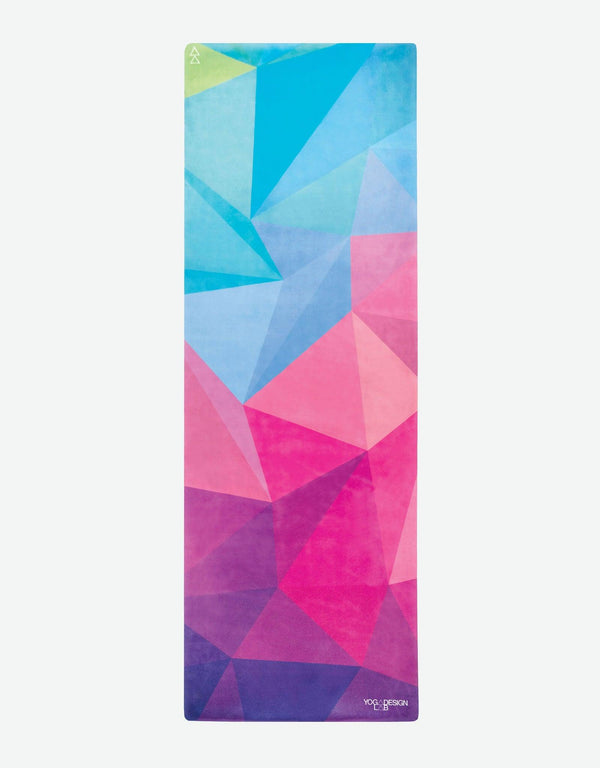


Compare Mats for Your Practice
There’s no single material that feels best to everyone. Use this comparison to narrow your options, then check the details and care instructions for the individual mat.
| Mat or setup | A good fit for | What to consider |
|---|---|---|
| Mat-and-towel combination | Sweaty classes and people who prefer one combined surface | Check how the surface feels at the beginning of class and once you’re sweating. |
| Rubber-surface mat | Practitioners who want to explore a tactile surface for dry practice | Texture varies by mat. Check the materials if you have a latex allergy. |
| Cork-surface mat | People interested in the feel and appearance of cork | Try the specific surface in the conditions you practice in. Follow its own care directions. |
| Cushioned mat | Floor poses and practices where padding is a priority | Compare comfort with how stable the mat feels in standing and balancing poses. |
| Travel mat | Practicing away from home or carrying a mat frequently | Consider how much cushioning you’re willing to trade for portability. |
| Mat with a separate yoga towel | People who want to add sweat management to a mat they already own | The towel should fit the practice area and stay flat as you move. |
For sweaty and hot yoga
Hot yoga takes place in a heated room, so sweat can become part of the equation early in class. A mat-and-towel combination is worth considering if you want a single setup rather than a separate towel over your mat.
Our Combo Mat combines a recycled-PET microfiber surface with a natural-rubber base. It’s an option for sweaty practice, but no mat can promise that your hands and feet will never slide. Pay attention to how the surface feels throughout class, not only when you first roll it out.
A separate yoga mat towel is another option if you already like your mat’s cushioning and floor stability. Lay it flat and check that it doesn’t bunch beneath your hands or feet. A small hand towel can also be useful when you want to wipe your palms during class.
For a mostly dry practice
If your hands and feet tend to stay dry, focus on how a mat feels before you warm up. You may prefer a surface with a tactile feel that lets you plant your hands confidently without catching too much during transitions.
The tradeoff is personal. A surface that feels pleasantly secure to one person might feel too grabby when another person steps forward or turns a foot. If you can, try the mat in the movements you actually do instead of judging it with one hand in a store.
For cushioning or portability
If kneeling comfort is high on your list, consider a cushioned option such as our Infinity Mat. Check how it feels both on your knees and when you balance on one foot. You can also add a folded blanket beneath your knees instead of choosing your entire mat around one pose.
For trips or a commute, the Travel Combo Mat offers a portable version of the mat-and-towel construction. Consider where you’ll practice and how much floor contact feels comfortable to you. A mat that’s convenient to carry still needs to feel steady enough for the movements you plan to do.
Look Beyond the Top Surface
Check the base and floor
Even a comfortable surface won’t solve the problem if the whole mat moves. Set it on a clean, dry floor and gently test whether it shifts as you step into a lunge. Dust, moisture, or an uneven surface under the mat can affect how stable the setup feels.
If you practice on carpet, a mat may move or feel less steady than it does on a firm floor. When possible, try the same setup on a hard, level surface. If the mat continues to bunch or slide, change your practice location or look for a setup that stays flatter.
Consider the room you need
A mat should give you enough space to place your hands and feet without constantly landing on the floor. Your preferred length and width depend on your body and the way you move.
Think about the poses where slipping bothers you most. If your hands run out of room in Downward-Facing Dog, or your feet land off the sides in a wide stance, check the mat’s dimensions before buying. A larger mat may be more comfortable, but consider how easily you can carry and store it.
Choose materials with care in mind
Material affects more than the feel beneath your hands. It also affects the care directions you’ll need to follow.
For example, cork comes from the bark of cork oak trees, while the Combo Mat’s surface contains recycled PET. Those are specific material choices, not guarantees about a product’s total environmental impact. If materials matter to you, read the description for the exact mat rather than assuming every product in a range has the same construction.
Note: If you have a latex allergy or another material sensitivity, check the exact product materials and ask a qualified clinician about your individual needs.
How to Test a Mat for Slipping
A useful test resembles your normal practice. You don’t need to force a difficult pose or wait until you feel unsteady. Start with familiar movements and notice what changes.
Step 1: Set up on your usual floor
Place the mat on a clean, dry surface with the intended practice side facing up. Smooth it flat, then check that the edges and any towel are out of your way.
Step 2: Test it before you warm up
Place your hands on the mat and move gently into a familiar pose, such as Downward-Facing Dog. Notice whether your palms stay where you place them and whether you can move your feet without feeling stuck.
Step 3: Try standing movements
Step into a comfortable lunge and then a standing balance. Check whether the mat shifts underneath you and whether the cushioning feels steady. Keep a wall or chair nearby if you want support while balancing.
Step 4: Check again as practice continues
Repeat the same simple movements after you’ve warmed up or begun to sweat. If you normally use a towel, test it with the towel in place. This gives you a more useful comparison than a dry-hand test alone.
Step 5: Adjust one thing at a time
If you slip, identify what moved before changing your whole setup. Wipe your hands, straighten your towel, or move the mat to a clean, firm floor. Then repeat the movement gently.
Use these observations to decide what you need:
- Hands or feet slide when dry: Look for a surface that feels more secure under dry contact.
- Sliding starts with sweat: Consider a towel or a mat designed for sweaty practice.
- The whole mat shifts: Check the floor and the underside of the mat.
- You feel unsteady on soft cushioning: Try a firmer surface or add padding only where you need it.
Key Takeaway: Test both the practice surface and the base in the conditions you actually practice in.
What to Do When Your Current Mat Feels Slippery
Before replacing your mat, check whether a small adjustment helps. A slippery moment can come from a shifting towel, damp hands, residue on the surface, or a floor that needs cleaning.
First, make sure you’re using the intended side of the mat. If you use a towel, spread it flat before class and readjust it if it gathers under your palms. Keep a hand towel nearby so you can dry your hands or feet when needed.
Next, check the mat’s care instructions. Skin oils, lotions, dust, and cleaning-product residue can change how a surface feels. Use the cleaning method recommended for your particular mat, and let it dry fully before rolling it up or practicing again.
Avoid assuming that one popular cleaning trick works for every material. Salt scrubs, strong cleaners, soaking, and machine washing may not be appropriate for your mat. When in doubt, follow the manufacturer’s instructions rather than borrowing a method from a different product.
Your pose setup can help, too. In Downward-Facing Dog, try bending your knees and placing your hands a little closer to your feet if that feels more manageable. In a lunge, shorten your stance or lower your back knee onto a folded blanket. These adjustments can make it easier to find a comfortable position while you work out the mat issue.
If you’re slipping frequently, pause and reset rather than trying to hold a pose through it. A qualified yoga teacher can help you explore a setup that suits your body. If you have an injury or medical condition, ask a qualified clinician for guidance tailored to you.
Bottom line: Start with the simplest fix, but replace a mat that no longer gives you a comfortable, dependable practice surface.
Conclusion
The best mat for not slipping is the one that feels steady in your real practice, whether your hands stay dry or you leave class covered in sweat. At Yoga Design Lab, we think a mat should also suit your space, your care routine, and the way you like to move.
- Choose for your usual moisture level, not a label alone.
- Check both the top surface and the mat’s contact with the floor.
- Balance cushioning and portability with the stability you want.
- Follow the care instructions for your specific mat.
Next step: Take our Mat Quiz to explore a mat that fits your practice.
FAQ
What is the best yoga mat for sweaty hands?
Look for a surface designed with sweaty practice in mind, or try a fitted yoga mat towel over a mat you already own. Test your setup both before and after your hands get damp, since the feel can change during class.
Why do my hands slip on my yoga mat?
Sweat, lotion, residue, or a surface that doesn’t suit your practice can all contribute. Check whether your hands are sliding on the mat or whether the mat itself is moving on the floor, then address that part of the setup.
Is a thicker yoga mat better for preventing slipping?
Not necessarily. Thickness can add cushioning, but it doesn’t tell you how the top surface will feel under your hands or how securely the base will sit on the floor. Try both standing and kneeling poses to find a balance that feels comfortable.
Can I use a towel instead of buying a new mat?
A yoga mat towel may be worth trying if sweat is the main issue and you otherwise like your mat. Place it flat over the mat and check that it stays in position as you move.


