


Introduction
We have all experienced that moment of frustration: you are holding a strong Adho Mukha Svanasana (Downward-Facing Dog), focusing on your breath, when your palms begin to slide forward. Suddenly, your focus shifts from mindfulness to survival as you try to keep your face off the floor. At Yoga Design Lab, we understand that a mat is more than just a piece of foam; it is the foundation of your entire practice. A slippery surface does more than distract you; it breaks the flow of your Asana (physical poses) and can lead to misalignment.
This article explores the science of grip, the importance of material choice, and how to identify which mat will actually stay put under your hands. Whether you are a heavy sweater in a heated room or a gentle mover in a cool studio, the "best" mat is the one that meets your specific needs. We will cover the differences between moisture-activated and dry-grip surfaces to help you find your perfect match.
Quick Answer: The best non slip yoga mat depends on your sweat level. For hot yoga, a moisture-activated Combo Mat (microfiber and rubber) is ideal. For dry hands or general practice, a high-traction surface like our Infinity Mat or a naturally grippy Cork Mat provides the best stability.
Sticky vs. Moisture-Activated Grip
Understanding the science of traction is the first step toward a slip-free practice. Not all grip is created equal. Most mats on the market fall into one of two categories: "sticky" surfaces or "moisture-activated" surfaces. Knowing which one you need is the most important decision you will make.
The Traditional Sticky Surface
Many traditional mats are made from materials like PVC or TPE, which feel tacky or "sticky" to the touch when they are dry. This is excellent for Hatha (a slower-paced yoga style) or Yin yoga where you aren't building a lot of internal heat. However, these surfaces are often "closed-cell," meaning they do not absorb moisture. The moment a drop of sweat hits the surface, that stickiness vanishes, and the mat becomes a slip-and-slide.
The Moisture-Activated Surface
If you tend to sweat, you need a moisture-activated grip. These surfaces, often made of microfiber or natural cork, actually become grippier as they get wet. Instead of repelling water, they use it to create surface tension. This is why many practitioners in hot yoga studios find that they finally stop sliding once they switch to a hybrid mat. If your hands are bone-dry, these mats might actually feel a little slick at first, which is why some yogis lightly mist their mat with water before beginning.


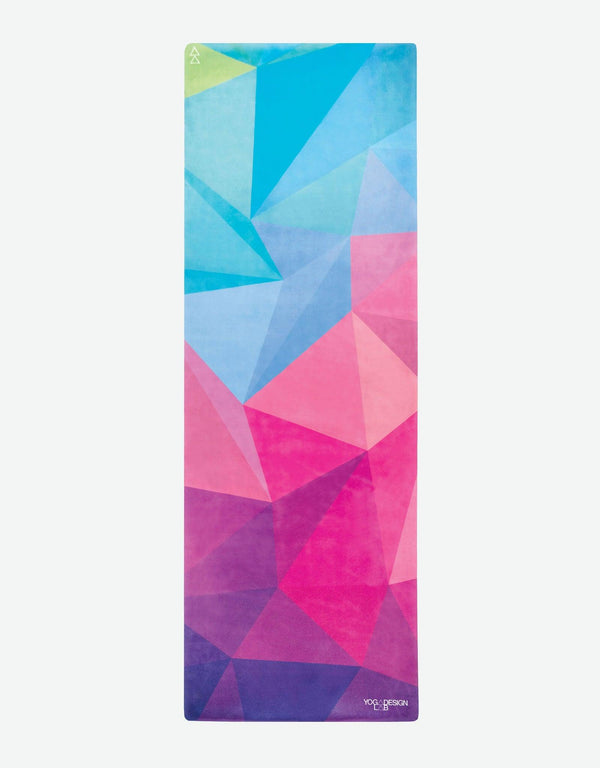


Best for Hot Yoga: The Combo Mat
For those who embrace the heat, the Combo Mat is often the ultimate solution. We designed this mat to solve the specific problem of the "mat-and-towel bunch." In a typical heated Vinyasa class, most people place a microfiber towel over a rubber mat to soak up sweat. The problem? The towel moves, bunches, and creates a tripping hazard.
The Combo Mat features a natural tree rubber base bonded to a recycled PET microfiber top. It is a mat and towel in one. Because the microfiber is permanently attached to the rubber, it stays perfectly flat. The microfiber surface is designed to thrive on moisture. The more you sweat, the deeper your grip becomes.
- Materials: Natural tree rubber base and recycled PET microfiber made from plastic bottles.
- Best For: Hot yoga, Bikram, Power Yoga, and heavy sweaters.
- Sustainability: We use water-based inks for our vibrant designs and recycled materials to reduce plastic waste.
- Care Note: These mats are machine washable on a gentle cycle, making them the most hygienic choice for sweaty sessions.
Best for All-Around Stability: The Infinity Mat
If you want a mat that feels secure from the moment you step on it, regardless of sweat, the Infinity Mat is the choice. This mat uses a high-performance PU (polyurethane) top layer. Unlike microfiber, which needs a little moisture to "wake up," the Infinity Mat offers an immediate, intense grip.
This is a versatile mat that bridges the gap between different styles of practice. It is thick enough to provide significant joint support for your knees and spine, yet firm enough to ensure you don't feel wobbly during balance poses like Vrksasana (Tree Pose). The surface is laser-cut with a subtle texture that helps with alignment and provides mechanical traction for your hands and feet.
Key Takeaway: If you switch between unheated morning flows and slightly sweaty afternoon sessions, a PU-topped mat like the Infinity Mat offers the most consistent grip across all temperatures.
Best for Natural Traction: The Cork Mat
Natural materials offer a unique type of grip that synthetic foams cannot replicate. Our Cork Mat is a favorite for those who want a grounded, earthy feel under their hands. Cork is harvested from the bark of cork oak trees, making it a renewable and biodegradable resource.
The magic of cork lies in its cellular structure. It contains a natural waxy substance called suberin. When cork gets wet, the suberin is activated, making the surface increasingly grippy. Beyond the traction, cork is naturally antimicrobial. It resists the growth of mold and bacteria, which is a major benefit if you practice frequently and want your gear to stay fresh.
- Antimicrobial Properties: Naturally resists odors and bacteria.
- Natural Rubber Base: Stays heavy and flat on the floor without curling at the edges.
- The Feel: Smooth to the touch but exceptionally grippy when movement begins.
- Travel Option: We also offer a Travel Cork Mat for those who need this level of grip on the go.
Comparing Non Slip Options
To help you decide which material suits your specific practice, we have broken down the performance characteristics of our primary mat types.
| Mat Type | Primary Material | Grip Activation | Best Use Case |
|---|---|---|---|
| Combo Mat | Microfiber & Rubber | Wet (Sweat-activated) | Hot Yoga / Sweaty Vinyasa |
| Cork Mat | Natural Cork & Rubber | Hybrid (Dry or Wet) | Eco-conscious / All styles |
| Infinity Mat | PU & Rubber | Immediate (Dry or Wet) | Advanced flow / Extra grip |
| Flow Mat | TPE Blend | Dry (Texture-based) | Beginners / Gentle yoga |
For more guidance on matching a mat to your practice, read our guide on how to choose the best yoga mat.
Why Material Choice Matters for Grip
The "best" non slip mat is rarely the cheapest one, and the reason comes down to material density. Many mass-produced mats are made of low-density foam. While they feel soft and squishy, they often stretch when you apply weight. If your mat is stretching under your hands while you are in a pose, you will feel like you are slipping even if the surface is technically "sticky."
We prioritize natural tree rubber for the base of our premium mats because it is incredibly dense. This density provides a "grounded" feel. When you press your hands into the mat, the rubber doesn't move. It stays anchored to the studio floor. This stability is the secret ingredient to a non-slip experience.
The Role of Sustainability
Choosing a sustainable mat isn't just about the planet; it's about the quality of the materials. Natural rubber, renewable cork, and recycled PET microfiber are high-performance materials. They are more durable than traditional plastics. A mat that lasts for years without flaking or losing its texture is a better investment for both your wallet and the environment.
You can explore our sustainability commitment to learn more about the materials and choices behind our products.
How to Stop Slipping: Technique Tips
Sometimes, the slip isn't just about the mat—it is about how you are engaging with it. Even on the best non slip yoga mat, improper weight distribution can cause you to slide.
Step 1: Engage the hands. Instead of dumping all your weight into the heels of your hands, spread your fingers wide. Press down through the "L" shape formed by your thumb and index finger. Imagine you are trying to "claw" the mat slightly with your fingertips.
Step 2: Find your "Bandhas." In yoga, Bandhas are energy locks or internal engagements. Engaging your core and pulling your navel toward your spine helps lift your weight off your extremities. When your core is active, there is less downward pressure on your hands, which reduces sliding.
Step 3: Manage the moisture. If you are using a Combo Mat, remember that it loves water. If you aren't sweating yet, lightly spray the hand and foot areas with a water bottle. This will "prime" the microfiber and give you instant traction.
Step 4: Check your alignment. In poses like Virabhadrasana II (Warrior II), ensure your weight is distributed evenly between the front and back foot. If you lean too far forward, the lateral pressure can cause the back foot to slide.
Note: If you find your hands are still sliding after checking your technique, you may have a buildup of oils or lotions on your mat.
Caring for Your Non-Slip Surface
To keep your mat grippy, you must keep it clean. Our skin produces natural oils, and many of us use lotions or sunscreens that transfer to the mat surface. Over time, these oils create a microscopic film that acts like a lubricant, making even the grippiest mat feel slick.
The Cleaning Routine
- Daily: After every practice, wipe your mat down with a damp cloth and a very mild, vegan soap or a specialized yoga mat spray.
- Microfiber Mats: Our Combo Mat can go in the washing machine. Use a cold, gentle cycle with no bleach and very little detergent.
- Cork and PU Mats: These should never go in the washing machine. Wipe them down with a 50/50 water and white vinegar solution to break down oils without damaging the material.
Drying and Storage
Never put your mat in the dryer. The high heat can break down the natural rubber and cause the materials to delaminate. Instead, hang your mat to air dry. For natural rubber mats, keep them out of direct sunlight. UV rays can "bake" the rubber, making it brittle and reducing its natural tackiness. Always ensure the mat is completely dry before rolling it up to prevent odors.
Bottom line: Regular cleaning is the most effective way to maintain the high-performance grip you invested in.
For additional care guidance, see our article on choosing and caring for your yoga mat.
Choosing the Right Thickness for Stability
The thickness of your mat plays a surprising role in how stable you feel. While it might seem like a thicker mat is always better, that isn't the case for everyone.
3.5mm to 4.5mm (Standard): This is the "sweet spot" for most yogis. It provides enough cushioning to protect your knees in Anjaneyasana (Low Lunge) but is thin enough that you feel connected to the floor. Most of our Combo and Cork mats fall into this range.
5mm to 6mm (Cushioned): For those with sensitive joints or those who practice on hard concrete floors, a thicker mat like our Infinity Mat (5mm) provides extra support. This prevents the "bottoming out" feeling during floor work.
1.5mm (Travel): Travel mats are designed for portability. Because they are so thin, they offer the most "floor feel" and the best stability for balance poses. Many people use a Travel Combo Mat as a high-grip topper over a thicker, generic studio mat.
Removing the Intimidation Factor
If you are new to yoga, don't feel like you need the most expensive professional mat on day one. However, avoid the ultra-cheap, thin foam mats found at big-box retailers. These often flake apart and provide very little grip, which can be discouraging for a beginner.
A versatile, high-quality Flow Yoga Mat is an excellent entry point. It provides reliable dry grip and sufficient cushioning without an overwhelming price tag. As your practice deepens and you start attending sweatier classes, you can then consider specialized options like the Combo Mat.
- Start with a mat that feels comfortable for your knees.
- Focus on your hand placement to build natural stability.
- Don't be afraid to use props like Cork Blocks to bring the floor to you.
- The best mat is simply the one that makes you want to practice more often.
For more beginner-focused guidance, read what type of yoga mat is best for beginners.
Realistic Expectations for Grip
No mat is 100% "slip-proof" in every possible scenario. Your grip will change based on the humidity of the room, the temperature of your skin, and even the type of laundry detergent you use on your yoga clothes. Yoga is a practice of constant adjustment.
Some mats, like those made of natural rubber, have a distinct scent when they are new. This is normal and fades over time as the mat "breathes." Similarly, some high-traction mats require a short "break-in" period of a few classes before they reach their peak grippiness. Be patient with your gear as it adapts to your body.
Key Takeaway: Consistency is the goal. A high-quality mat provides a reliable baseline, but your own strength and technique will always be the most important factors in your stability.
Conclusion
Finding the best non slip yoga mat is about matching your environment and sweat levels to the right material. If you love hot yoga, the moisture-activated microfiber of the Combo Mat is your best ally. If you prefer a natural, antimicrobial surface with an earthy feel, the Cork Mat is an exceptional choice. For those seeking immediate, intense grip and joint support, the Infinity Mat stands out as a high-performance favorite.
At Yoga Design Lab, we believe that your gear should be a beautiful extension of your practice. Inspired by the vibrant energy of Bali, we combine artful designs with sustainable materials like natural tree rubber and recycled plastic bottles. When you roll out a mat that you love, you are more likely to show up for your practice.
- Identify your sweat level: Choose between moisture-activated or immediate grip.
- Consider your joints: Pick a thickness that supports your unique body.
- Prioritize materials: Natural rubber and cork offer superior stability and sustainability.
- Maintain your gear: Keep your mat clean to ensure the grip lasts for years.
"Your yoga mat is your sacred space. When it supports you fully—without slipping or sliding—you are free to go deeper into your breath and your movement."
If you are still unsure which mat fits your flow, we invite you to take our Mat Quiz. It is a simple tool designed to provide a personalized recommendation based on your specific practice style and preferences.
FAQ
Why is my new yoga mat still slippery?
Many high-quality mats have a thin protective film from the manufacturing process that needs to be "broken in." For microfiber or cork mats, try lightly misting the surface with water before your next class. For other mats, a thorough wipe-down with a water and vinegar solution can help remove any residual factory oils and reveal the true grip.
Can I use a regular exercise mat for yoga?
Exercise mats are usually designed for fitness routines like crunches or planks where you are wearing shoes or staying in one spot. They are often made of thick, squishy foam that lacks the surface tension and density required for yoga. This "squish" can make balancing difficult and the surface is rarely grippy enough to keep your hands from sliding in poses like Downward Dog.
Is natural rubber better than PVC for grip?
In almost every case, yes. Natural tree rubber is denser and more eco-friendly than PVC. Its weight keeps the mat flat on the floor, and its open-cell structure provides a "springy" traction that PVC—which is often a closed-cell plastic—cannot match. Additionally, natural rubber is a renewable resource, whereas PVC is a synthetic plastic that is difficult to recycle.
Do I need a yoga towel if my mat is non-slip?
If you have a traditional rubber or PU mat, you might still need a towel if you sweat excessively, as the moisture can eventually sit on top of the surface. However, if you use a Combo Mat, the towel is built-in. The microfiber top layer performs the exact same function as a yoga towel, soaking up sweat and converting it into grip, which eliminates the need for an extra layer.


