


Introduction
Settling into Child’s Pose, or Balasana (a resting pose with the forehead on the mat), should be a moment of absolute peace. However, if you are met with a musty scent or see salt stains from yesterday’s session, that tranquility quickly fades. Similarly, sliding during Downward-Facing Dog, known as Adho Mukha Svanasana, is often caused by a buildup of body oils rather than a lack of strength. At Yoga Design Lab, we believe that your practice space should be as fresh and inspiring as the art on your mat. This guide explores the most effective methods for maintaining your gear, covering daily routines, material-specific deep cleaning, and proper drying techniques. By following these steps, you can ensure your mat remains a high-performance sanctuary for years to come.
Quick Answer: The best way to clean a yoga mat is to wipe it down after every session with a solution of three parts distilled water and one part white vinegar or a drop of mild dish soap. For deeper cleans, the method depends on the material; microfiber mats often allow for a gentle wash, while natural rubber and cork require more specific surface care to avoid damage.
Why Regular Mat Maintenance Is Essential
A yoga mat is more than just a piece of equipment; it is the foundation of your movement. During a vigorous practice, the surface acts as a magnet for sweat, skin oils, and microscopic skin cells. In a warm environment—especially during hot yoga—this moisture can lead to bacterial growth and unwanted odors.
Beyond hygiene, cleanliness directly impacts your performance. Over time, the natural salts in sweat and the oils from your skin create a thin, invisible film. This film acts as a lubricant, causing you to lose that essential "sticky" grip. Regular cleaning removes this barrier, restoring the original texture of the material and ensuring your hands and feet stay planted.
Proper care also honors the sustainability of your gear. High-quality materials like natural tree rubber and recycled PET (microfiber) are durable, but they can be degraded by salt and UV exposure. A consistent cleaning routine prevents the material from becoming brittle or lose its structural integrity, keeping your mat out of the landfill and in your practice space. Explore our sustainability commitment for more about the materials behind our gear.


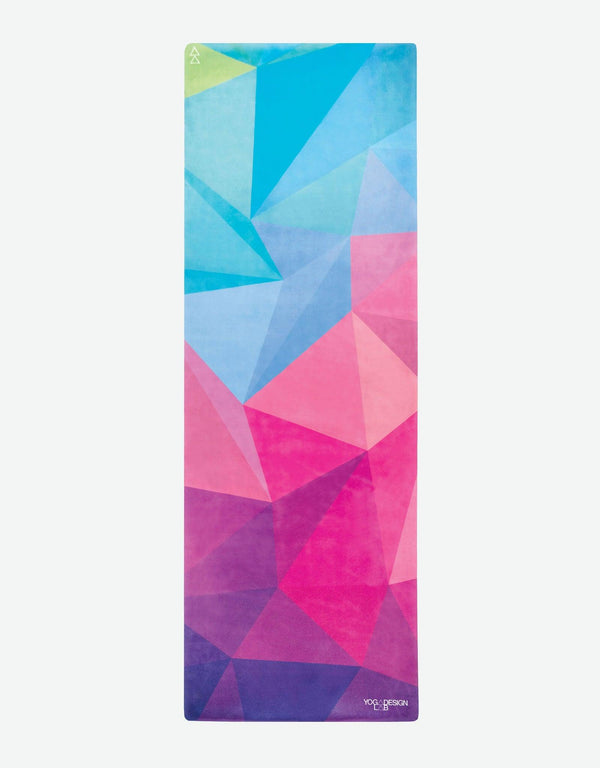


Knowing Your Material Before You Clean
Before reaching for a spray bottle, you must identify what your mat is made of. Using the wrong solution can permanently damage certain fibers or strip the grip from natural materials. Most mats fall into two categories: open-cell and closed-cell.
Open-Cell vs. Closed-Cell Construction
Open-cell mats are porous and absorbent. They are designed to pull moisture away from the surface, which is why they are often favored for sweaty practices where grip is paramount. However, because they act like a sponge, they require more thorough rinsing to remove trapped sweat.
Closed-cell mats have a dense, non-porous surface. Sweat stays on the top rather than soaking in. These mats are generally easier to sanitize because bacteria cannot move deep into the core. However, they often require a towel to manage moisture during a heavy session.
| Mat Type | Material Example | Best Cleaning Approach |
|---|---|---|
| Microfiber Top | Combo Mat | Machine or hand wash with mild soap |
| Natural Cork | Cork Mat | Gentle wipe with water; do not soak |
| Natural Rubber | Flow Yoga Mat | Diluted vinegar wipe; avoid heavy oils |
| PU / Polymer | Infinity Mat | Soft cloth and water; no harsh chemicals |
For a broader comparison of materials and practice needs, read our guide to choosing the best yoga mat for your practice.
Routine Maintenance: The Daily Post-Practice Wipe
The most effective way to prevent "mat funk" is to address the moisture immediately after your final Savasana (Corpse Pose). You should never roll up a damp mat and leave it in a car or bag, as this traps bacteria in a dark, humid environment.
Step 1: Blot the surface. Use a clean, dry towel to soak up any visible puddles of sweat. If you use a yoga mat towel during class, use the dry corners to blot the mat before you leave the room.
Step 2: Apply a gentle spray. Use a dedicated mat wash or a DIY solution. A mixture of three parts distilled water to one part white vinegar is a classic choice. The vinegar acts as a mild disinfectant and effectively cuts through surface oils without leaving a sticky residue.
Step 3: Wipe in circular motions. Using a soft, lint-free cloth, wipe the entire surface. Pay extra attention to the areas where your hands and feet land most frequently.
Step 4: Clean the bottom. Do not forget to wipe the underside of your mat. The floor of a studio or gym can harbor dust and germs that get transferred to the top layer once the mat is rolled up.
Step 5: Air dry. Let the mat lie flat or hang it over a chair until it is bone-dry to the touch. This usually takes 5 to 10 minutes for a light daily wipe.
Key Takeaway: Consistency is the secret to a long-lasting mat. A 30-second daily wipe-down prevents grime from embedding in the material and keeps the surface performing as intended.
Deep Cleaning the Signature Combo Mat
The Combo Mat features a natural rubber base bonded to a recycled PET microfiber top. This construction is designed for high-sweat practices, but the microfiber can eventually hold onto minerals from your sweat.
Because this mat is essentially a mat and towel in one, it can handle a more robust cleaning than standard rubber mats. If you have the Travel version, it is specifically engineered to be machine-washable.
Machine Washing Instructions (Travel Combo Mat Only)
- Use a front-loading machine. The agitator in top-loading machines can be too aggressive and may fray the edges of the mat.
- Select a cold, gentle cycle. Use a small amount of mild detergent.
- Avoid bleach and fabric softeners. These chemicals will destroy the microfiber’s ability to grip and may damage the water-based inks.
- No spin or low spin. To preserve the shape, avoid high-speed spin cycles.
Hand Washing Instructions (3.5mm and 5.5mm Mats)
- Submerge in lukewarm water. A bathtub is the perfect place for this. Add a tablespoon of mild soap.
- Scrub gently. Use a soft sponge to work the soap into the microfiber.
- Rinse until clear. It is vital to remove all soap residue, as any left behind will make the mat slippery when it gets wet again.
- Press out water. Lay the mat on a dry towel, roll them together, and press down to squeeze out excess moisture.
Bottom line: The signature microfiber surface of our mats is moisture-activated, but it needs to be free of oil and soap buildup to provide the best possible traction.
Caring for Natural Cork Yoga Mats
Cork is a fascinating material. It is naturally antimicrobial because it contains phenolics, which help kill bacteria and fungi. This makes a Cork Mat one of the most hygienic options available. However, sweat still leaves behind salt rings and skin oils that need removal.
The Do's and Don'ts of Cork Care
- Do: Use a simple damp cloth with plain water for most cleanings. If the mat is very dirty, add a single drop of dish soap to a large bowl of water.
- Don't: Never submerge cork in water. Excessive moisture can cause the natural wood fibers to swell or eventually crack.
- Don't: Avoid essential oils. While they smell lovely, high concentrations of oil can stain the natural cork surface and make it slick.
Step 1: Lightly mist. Spray the surface with water. You do not want the cork to look "soaked," just damp.
Step 2: Wipe and dry. Wipe the mat from top to bottom with a soft cloth. Ensure it is completely dry before rolling. Cork should always be rolled with the cork side facing out to prevent the surface from cracking over time.
How to Handle Natural Tree Rubber
Natural rubber is an eco-friendly, high-performance material, but it is sensitive to its environment. It does not react well to UV light or harsh acids.
If you are cleaning a mat with an exposed rubber surface, like our Flow Yoga Mat, avoid using full-strength vinegar. The acidity can speed up the drying process of the rubber, making it brittle. Instead, use a very diluted soap solution.
Note: Natural rubber often has a distinct "earthy" scent when it is new. This is a sign of the material's purity. To help the smell fade, let the mat air out in a well-ventilated room for 48 hours.
The Most Important Step: Proper Drying
Improper drying is the leading cause of "mat funk" and material damage. If you roll up a mat that is even slightly damp, you are creating a perfect habitat for mildew to grow within the fibers or pores.
Avoid the Dryer and Sunlight
Never put a yoga mat in a mechanical dryer. The high heat will melt the recycled PET fibers and destroy the bond between the top layer and the natural rubber base. Even a "low heat" setting is far too intense.
Similarly, keep your mat out of direct sunlight. While it might seem like a fast way to dry it, UV rays cause natural rubber to oxidize. This leads to "sun-rot," where the mat begins to flake, crumble, and lose its vibrant color.
The Drying Process
- Hanging: Drape your mat over a sturdy shower rod or a drying rack indoors. Ensure it is draped evenly so it doesn't develop a permanent crease.
- Airflow: If possible, use a fan to increase air circulation.
- Patience: A deep-cleaned mat can take 24 to 48 hours to dry completely to the core. Do not rush this process.
For another practical look at cleaning routines, read how to clean a yoga mat for performance and longevity.
Essential Tips for Hot Yoga Practitioners
If you practice Bikram or hot Vinyasa, your mat is subjected to high volumes of salt and humidity. Your cleaning routine should be more rigorous than someone practicing restorative styles.
- Use a barrier. Adding a full-length yoga towel on top of your mat prevents it from becoming fully saturated. It is much easier to toss a towel in the wash than to deep clean a mat every day.
- The "fresh air" day. Once a week, unroll your mat in a well-ventilated room and let it breathe for a full day, even if you didn't practice. This allows any residual moisture deep in the core to evaporate.
- Antifungal boost. For heavy sweaters, many find that adding two drops of tea tree oil to their cleaning spray helps keep the mat smelling fresh due to the oil's natural properties.
If sweat management is a regular concern, explore this guide to hot yoga mat towels with grip.
When Is It Time to Replace Your Mat?
Even with the best care, every mat eventually reaches the end of its life. Recognizing the signs of wear is important for your safety and the quality of your practice.
- Thinning or balding: If the texture has worn smooth where your hands and feet land, you will lose traction and risk injury.
- Crumbling: If you notice small bits of rubber or cork on your leggings after class, the molecular structure is breaking down.
- Persistent odor: If a mat still smells like a locker room after a deep bathtub soak, bacteria have likely colonized deep within the material.
- Compressed cushioning: If you can feel the hard floor against your knees in poses where you used to feel supported, the material has lost its structural integrity.
Bottom line: A well-maintained mat should last several years, but once the grip fails or the material begins to shed, it is time to upgrade for the sake of your practice and joint health.
Conclusion
Caring for your yoga mat is an act of respect for your practice and the planet. By choosing sustainable materials and maintaining them with gentle, natural methods, you ensure your gear remains a reliable foundation for years to come. Our journey began in Bali with a vision to merge artful design with eco-conscious performance, and proper mat care is the final piece of that puzzle. When we treat our gear with intention, we are more excited to roll it out and show up for ourselves.
- Take the Mat Quiz for a personalized recommendation based on your practice style.
- Explore our Combo Mat collection to find a design that inspires your next session.
- Browse our Infinity Mat collection for a naturally antimicrobial and sustainable choice.
Key Takeaway: Proper maintenance includes a daily wipe, material-specific deep cleaning, and 100% air-drying away from the sun. This routine preserves the beauty and performance of your mat.
FAQ
Can I use disinfecting wipes on my yoga mat?
Most standard household disinfecting wipes contain harsh chemicals, bleach, or high concentrations of alcohol that can damage natural rubber and cork. If you must use a wipe, look for plant-based, alcohol-free versions. Always wipe the mat down again with a damp cloth soaked in plain water afterward to remove any chemical residue that could make the surface slippery.
How often should I deep clean my mat?
If you practice hot yoga or sweat heavily several times a week, a deep clean once every two weeks is recommended. For those with a more moderate or restorative practice, once a month is usually sufficient. Always supplement deep cleaning with a light spray and wipe after every single session to prevent buildup. You can also review our easy-clean yoga mat guide for additional care considerations.
Why is my mat still slippery after cleaning it?
Slipperiness after cleaning is almost always caused by leftover soap residue. If your cleaning solution was too concentrated or wasn't rinsed thoroughly, a thin film remains that turns slick when it gets damp. Try wiping the mat down several times with a cloth soaked in plain, lukewarm water to "rinse" the surface, then allow it to dry completely.
Is it okay to use a washing machine for all mats?
No, you should never put a cork mat or a thick natural rubber mat in a washing machine, as the agitation and moisture will destroy them. Only specifically designed mats, such as our Travel Combo Mat, are built to withstand a gentle machine cycle. Always check the specific care instructions for your individual mat model before attempting to machine wash. For portable options, browse our travel mat collection.


