


Introduction
We have all been there: you are flowing through a high-energy Vinyasa (breath-synchronized movement) class, stepping back into Plank, only to find your toes dangling off the edge of your mat and onto the cold studio floor. Or perhaps you are in a crowded room, trying to extend your arms for a twist, but you are worried about encroaching on your neighbor’s personal space. These small distractions pull us away from our breath and the present moment. At Yoga Design Lab, we believe your gear should support your practice, not hinder it. Choosing the right yoga mat size and spacing is about more than just measurements; it is about creating a sanctuary that fits your unique body. This guide covers standard dimensions, how to choose for your height, and the nuances of studio etiquette. Finding a mat that fits your frame is the first step toward a more focused, expansive practice.
The Evolution of Standard Yoga Mat Dimensions
For many years, the "standard" yoga mat in the US was roughly 68 inches long and 24 inches wide. This size became common because it was easy to manufacture and fit the average height of practitioners several decades ago. However, as the global yoga community has grown and changed, so have the needs of the modern yogi.
Today, the industry standard has shifted toward 71 inches to 72 inches in length. This extra few inches might seem small, but for someone around 5’10” or taller, it is the difference between a restful Savasana (Corpse Pose) and having your heels on the hardwood. At a standard 24-inch width, most mats are designed to fit the average shoulder span, allowing for a compact footprint that works well in a busy studio environment. If you are comparing everyday options, explore the yoga mat collection for different styles and practice needs.


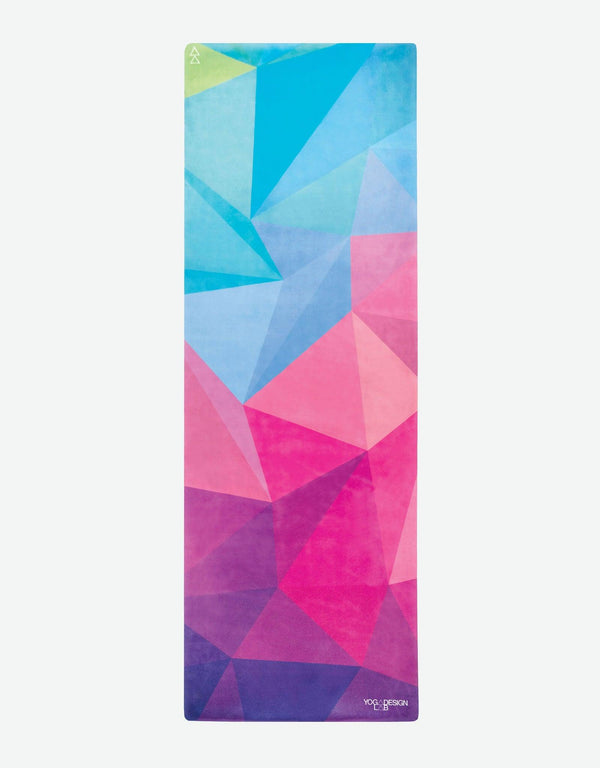


Why Length Matters for Your Practice
Length is arguably the most critical dimension for comfort. When you move through a Surya Namaskar (Sun Salutation), your "travel" on the mat—the distance between your hands in Downward-Facing Dog and your feet in Plank—requires enough real estate to keep you grounded.
The "Plus Six" Rule for Height
A general guideline we recommend is to choose a mat that is at least six inches longer than your height. If you are 5’6” (66 inches), a standard 72-inch mat gives you exactly six inches of buffer. This ensures that when you lie down completely flat, your head and feet remain on the cushioned surface.
Extra-Long Mats for Taller Yogis
For those over 6 feet tall, the standard 72-inch mat often feels like a constraint. If you find yourself constantly adjusting your position to stay on the mat, look for extra-long options that reach 80 to 84 inches. A longer mat allows for a wider, more stable stance in poses like Warrior II, where a cramped step can actually compromise your knee alignment and balance.
Key Takeaway: Your mat should be at least six inches longer than your height to allow for full-body extension without stepping onto the floor during transitions.
Understanding Mat Width and Lateral Stability
While length gets most of the attention, the width of your mat dictates how much lateral (side-to-side) space you have.
Standard Width (24 Inches)
The 24-inch width is the most common for a reason: it fits the majority of yoga mat bags and accommodates the shoulder width of most practitioners. It is the ideal choice for "studio hopping," as it ensures you won't take up more than your fair share of floor space in a popular, sold-out class.
Wide Mats (26 to 30+ Inches)
Some practitioners prefer more room to move. If you have a broader frame or simply enjoy the feeling of an expansive "island" for your practice, a wider mat can be a revelation. Wider mats provide a larger landing zone for arm balances and side-lying poses. However, keep in mind that a wider mat is often heavier and may require a specialized, larger carrying bag. For a cushioned, spacious option, the Infinity Mat is designed for extra room and support.
Thickness and Density: The Vertical Dimension
When we talk about yoga mat size and spacing, we must also consider the vertical space—how far the mat lifts you off the floor. Thickness impacts your joint comfort and your ability to balance.
- 1.5mm (Travel Thickness): These are ultra-thin and lightweight. Our Travel Combo Mat is a favorite for those who want to maintain their practice while on the road. Because they are so thin, they provide a very firm connection to the ground, which is excellent for balance but offers minimal cushioning. Explore the travel yoga mat collection for lightweight options.
- 3.5mm (Standard Thickness): This is the "sweet spot" for many. It provides enough padding for the knees and wrists without feeling "mushy." Our signature Combo Mat in 3.5mm thickness is designed for high-performance sessions where you want both support and stability. Browse the Combo Mat collection for mat-and-towel designs.
- 5mm to 6mm (Cushioned Thickness): For those with sensitive joints or those who prefer restorative styles of yoga, a thicker mat like our Infinity Mat offers deep cushioning.
Density vs. Thickness
It is a common myth that a thicker mat is always more comfortable. Density is actually more important. A cheap, low-density foam mat might be 6mm thick but will compress entirely under your weight, leaving your joints hitting the floor. A high-density mat made from natural tree rubber provides a firm, supportive foundation that protects your joints even at a thinner profile.
Studio Etiquette and Spacing
Practicing in a studio is a communal experience, and understanding the "unspoken rules" of yoga mat size and spacing helps keep the energy of the room positive and respectful.
Navigating a Crowded Room
In a busy studio, the teacher or front desk staff may ask you to "stagger" your mats. This means shifting your mat slightly forward or backward relative to your neighbor so that when you both reach your arms out to the side, you aren't touching.
The Footprint of Your Gear
While it is tempting to bring your mat, a large water bottle, a bolster, two blocks, and a strap, try to keep your gear contained within the width of your mat. This respects the "boundary" of your neighbor's space. If you are using a wider-than-average mat, try to arrive a few minutes early to find a spot that won't disrupt the flow of the room, such as a corner or the back row.
How Yoga Style Influences Size Needs
The type of yoga you practice most often should guide your sizing choice.
- Hot Yoga: In a heated room, you are going to sweat. Grip is your primary concern. Many hot yoga practitioners prefer a standard-sized mat paired with a high-performance towel, or a mat with a built-in microfiber top like our Combo Mat. Because you are often moving quickly, a standard 72x24 size is usually sufficient to keep you focused. For additional practice guidance, explore these hot yoga tips and preparation ideas.
- Restorative or Yin Yoga: These styles involve holding poses for long periods, often using many props. A slightly wider or thicker mat can provide the extra "nesting" space needed to feel fully supported.
- Vinyasa and Power Yoga: Because these styles involve a lot of movement and jumping (transitions), a mat with a bit of extra length (71-72") is helpful to ensure you don't jump off the mat during a vinyasa.
Sustainability and Material Choice
At Yoga Design Lab, our commitment to the planet is woven into the very fabric of our mats. When choosing the right size, consider that larger mats require more material. We believe in making that material count. Learn more about our sustainability commitment.
We use natural tree rubber for our bases and recycled PET microfiber (made from plastic bottles) for our tops. Choosing a durable, high-quality mat in the right size for your body is actually a sustainable choice—it means you won't need to replace a cramped, poor-quality mat a year from now. Whether it is our Cork Mat or our signature microfiber designs, we use water-based inks and biodegradable packaging to ensure your practice has a light footprint on the Earth. For another look at cork as a practice material, read this guide to natural cork yoga mats.
Assessing Your Needs: The Practical Tests
If you are still unsure which yoga mat size and spacing works for you, try these three simple tests at home:
- The Savasana Test: Lie down on your current mat. Are your heels hanging off? Is your head touching the floor? If so, you need a longer mat.
- The Plank Test: Move into a high plank position. Are your fingers or toes right at the very edge? If you feel like you have no room to shift, more length will give you a safer, more stable practice.
- The Warrior II Test: Step your feet wide for Warrior II. If you feel like your back foot is about to slide off the mat, you likely need more length to support your natural stride.
Bottom line: A yoga mat should feel like a dedicated space that fits your body’s natural proportions, allowing you to move with confidence and ease.
How to Care for Different Mat Sizes
The bigger the mat, the more surface area there is to clean. Regardless of size, regular maintenance extends the life of your gear.
For microfiber-topped mats like the Combo Mat, a light spray of water and a gentle wipe-down after every session is usually enough. For a deeper clean, these can often be machine-washed (check specific care instructions). Cork mats are naturally antimicrobial, so they require even less maintenance—just a quick wipe with a damp cloth.
Remember that a larger mat may take a bit longer to air dry, so ensure you have a space to hang it where it can breathe before you roll it up. Never roll your mat while it is still damp, as this can lead to odors and material degradation.
Conclusion
The right yoga mat size and spacing can truly change the way you show up to your practice. When you aren't distracted by the floor or feeling cramped, you can turn your attention inward to the breath and the movement. Whether you need a standard-sized mat for studio classes or an extra-long, high-density mat for your home practice, the goal is the same: to create an artful, sustainable foundation that inspires you to roll out your mat every day.
Our founder, Chad Turner, started this journey in Bali to replace uninspiring gear with something beautiful and functional. We carry that vision forward by ensuring every mat—no matter the size—is a blend of performance and soul. Learn more about how Yoga Design Lab began. If you are ready to find your perfect fit, take the Mat Quiz for a personalized recommendation tailored to your height and practice style.
FAQ
What is the most common yoga mat size in the US?
The most common size is approximately 68 to 72 inches long and 24 inches wide. This standard dimension fits the majority of practitioners and is compatible with most yoga mat bags and studio spaces.
I am over 6 feet tall; what mat size should I look for?
If you are over 6 feet, a standard mat will likely feel too short. Look for an extra-long mat that is 80 to 84 inches in length to ensure your head and feet stay supported during floor poses and transitions.
Does a thicker mat always provide better support?
Not necessarily. While thickness adds cushioning, the material's density is more important for support. A high-density natural rubber mat will protect your joints better than a thicker but low-density foam mat that collapses under your weight.
Can I use a wide mat in a crowded yoga studio?
You can, but it is important to be mindful of your neighbors. Standard mats are 24 inches wide; if your mat is 30 inches or wider, try to find a spot at the edge of the room or arrive early to ensure you aren't encroaching on someone else's space.


