


Introduction
Choosing where to unroll your mat is one of the first big decisions in any yoga journey. You might find yourself staring at a studio schedule, wondering if you can make the 6:00 PM Vinyasa (flow-based yoga), or looking at a quiet corner of your living room, questioning if you have the discipline to practice alone. At Yoga Design Lab, we believe that the best place to practice is wherever you feel most inspired to show up. Whether you are drawn to the collective energy of a heated studio or the peaceful solitude of your own home, each environment offers distinct advantages for your physical and mental well-being. This guide explores the nuances of a home yoga practice vs studio setting to help you decide which path aligns with your lifestyle, goals, and values.
The Studio Experience: Community and Guidance
For many, the yoga studio is a sanctuary. It is a dedicated space designed specifically to facilitate a deeper connection between mind and body. Stepping into a studio often feels like a ritual in itself, signaling to your brain that it is time to leave the outside world behind and focus inward.
Expert Instruction and Alignment
One of the most significant benefits of a studio is the presence of a qualified instructor. Especially for beginners, having someone to offer verbal cues or physical adjustments ensures that you are performing asanas (yoga poses) safely and effectively. An instructor can see if your alignment in Warrior II is putting strain on your knee or if your hips are uneven in Downward Facing Dog. This real-time feedback is invaluable for preventing injury and building a strong foundation.
The Power of Sangha
In yoga tradition, Sangha refers to a community of like-minded individuals. There is a unique, palpable energy that comes from breathing and moving in unison with others. This collective vibration can push you to hold a challenging pose just a few seconds longer than you might on your own. For those who thrive on social interaction, the studio becomes a place to meet friends and share the experience of growth.
A Curated Environment
Studios are often climate-controlled, specifically for practices like hot yoga. They offer a distraction-free zone where you won't be interrupted by a ringing phone or a pet seeking attention. The lighting, music, and even the scent of the room are all curated to enhance your Pranayama (breathwork) and focus.
Key Takeaway: The studio environment provides professional oversight and community support, making it an excellent choice for those who want to master proper form and feel the motivation of a group.




The Home Practice: Freedom and Flexibility
While the studio offers structure, a home practice offers ultimate freedom. As more people seek to integrate wellness into their daily routines without the stress of a commute, practicing at home has become a cornerstone of modern yoga culture.
Customizing Your Schedule
The most obvious benefit of practicing at home is convenience. You don't have to worry about traffic, parking, or missing a class because you stayed late at work. Your mat is always there, ready for a twenty-minute morning flow or a long, restorative session before bed. This flexibility often makes it easier to maintain a consistent daily habit.
Privacy and Comfort
For some, practicing in a room full of strangers can feel intimidating. At home, you have the privacy to fall out of a balance pose, try a new transition, or move in a way that feels intuitive without any perceived judgment. You can choose your own music, set the temperature to your liking, and wear whatever makes you feel comfortable.
Cost-Effectiveness
While there is an initial investment in quality gear, practicing at home is significantly more affordable over the long term. You aren't paying for monthly memberships or drop-in fees. This allows you to invest in premium, sustainable equipment that will last for years, rather than spending that money on recurring class costs.
Developing Self-Awareness
When you practice alone, you become your own teacher. You have to listen more closely to your body’s signals. Without an instructor telling you exactly what to do next, you begin to understand the "why" behind the movements. This deepens your intuition and allows you to tailor your practice to exactly what you need that day—whether that is a vigorous workout or a gentle Savasana (corpse pose or final relaxation).
Comparing the Two: At a Glance
To help you visualize the differences, consider how each environment impacts the practical aspects of your practice.
| Feature | Yoga Studio | Home Practice |
|---|---|---|
| Cost | Monthly fees or per-class rates. | One-time gear investment. |
| Guidance | Professional instructors provide feedback. | Self-guided or via digital platforms. |
| Environment | Dedicated, distraction-free space. | Familiar, flexible, but prone to distractions. |
| Social | Strong community and group energy. | Solitary and introspective. |
| Convenience | Requires travel and fixed timing. | Available 24/7 with no commute. |
Choosing the Right Gear for Your Space
The environment you choose often dictates the type of gear you need. Because we focus on blending high-performance functionality with artful design, we offer different solutions tailored to these specific settings. Explore the full yoga mat collection when comparing surfaces for different practice styles.
For the Studio Enthusiast
If you are heading to a studio, especially for hot yoga or a high-intensity Vinyasa class, the Combo Mat collection is often the preferred choice. It combines a natural tree rubber base with a recycled PET microfiber top, acting as a mat and towel in one. The grip is moisture-activated, meaning it actually becomes more slip-resistant as you sweat. This eliminates the need to carry an extra towel to class, keeping your studio setup clean and efficient.
For the Home Practitioner
At home, you might be practicing on hard surfaces like wood or tile. The Infinity Mats collection provides extra-thick cushioning and a textured surface that offers incredible support for your joints. Its superior grip works well in both dry and humid conditions, making it a versatile choice for any home workout. If you prefer a more natural feel, our Cork Mat is naturally antimicrobial and offers an earthy, grounded connection to the floor, which is perfect for creating a zen space in a spare room.
Support for Both
Regardless of where you practice, props can bridge the gap between your current flexibility and your goals. Cork Blocks and Yoga Straps are essential for maintaining proper alignment when a teacher isn't there to guide you. They help you reach the floor in a standing fold or find extra length in a seated stretch, making every practice safer and more accessible.
Quick Answer: A studio is best for those seeking expert guidance and community, while home practice is ideal for those who value privacy, convenience, and a personalized pace.
Overcoming Challenges in Both Settings
Every practice environment has its hurdles. Acknowledging these can help you prepare for a more successful experience.
Staying Motivated at Home
The biggest challenge of a home practice is often the "couch factor." When your bed or the TV is just a few feet away, it can be hard to step onto the mat. To combat this, try creating a dedicated yoga nook. Even a small corner with a beautiful mat and a few plants can signal to your brain that this is a sacred space for movement.
Dealing with Studio Commutes
The "stress of getting to yoga" is a real phenomenon. If rushing to a studio makes you more anxious, try to arrive ten minutes early. Use that time to sit on your mat, close your eyes, and begin your Pranayama (breathwork) before the teacher even starts. This helps you transition from the chaos of the day into the calm of the class.
The Hybrid Approach: The Best of Both Worlds
You don't have to choose just one. Many yogis find that a hybrid approach is the most sustainable way to grow. You might attend one or two studio classes a week to check in on your form and soak up the community energy, then supplement those with three or four shorter sessions at home.
This "middle path" allows you to enjoy the professional guidance of a teacher while maintaining the daily consistency that home practice provides. If you travel frequently, a Travel Yoga Mats collection can be a great addition to this lifestyle. These mats are lightweight and foldable, allowing you to bring the familiarity of your own gear to a new studio or a hotel room.
Sustainability in Your Practice
Whether you are at home or in a studio, your choices as a consumer have an impact. At YDL, we believe that yoga gear should be as kind to the planet as it is to your body. Using mats made from natural tree rubber and recycled plastic bottles ensures that your practice supports environmental health. You can explore our sustainability commitment for more about that approach.
Myth: High-performance yoga mats have to be made from synthetic, non-recyclable chemicals. Fact: Sustainable materials like natural cork and recycled PET can provide professional-grade grip and durability while remaining eco-conscious.
Setting Up Your Ideal Home Space
If you decide to lean more into a home practice, a little preparation goes a long way. You don't need a massive studio room; you just need intentionality.
- Clear the Clutter: A cluttered space leads to a cluttered mind. Move any furniture or items that might distract you or limit your movement.
- Focus on Lighting: If possible, practice near natural light. In the evenings, soft, warm lamps or even a candle can help set a restorative mood.
- Keep Your Props Handy: Having your Bolster, blocks, and strap within reach makes it more likely that you will use them.
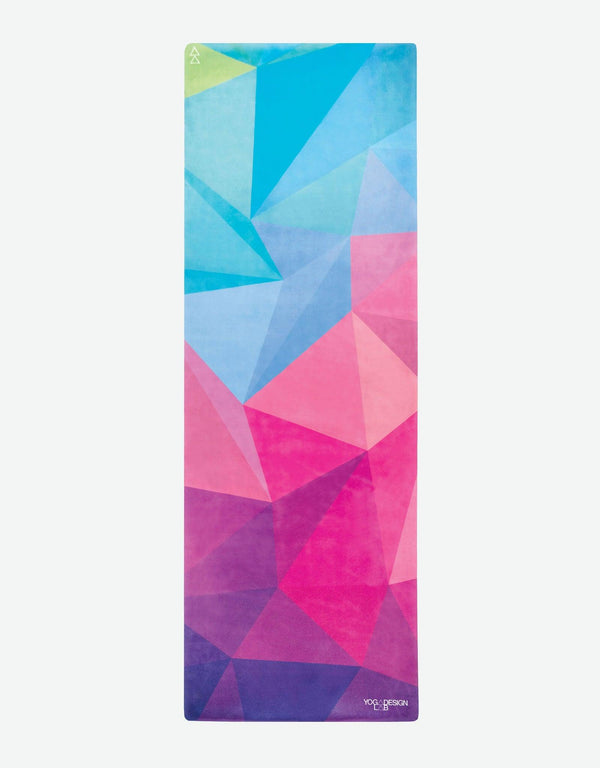
- Choose a Visual Anchor: Many people find that a mat with a beautiful, nature-inspired print serves as a visual invitation to practice. Our designs are intended to be art pieces that inspire you to roll out your mat every day.
Conclusion
The debate between home yoga practice vs studio isn't about finding a "winner." It's about finding the environment that makes you feel most empowered. The studio offers the wisdom of teachers and the heartbeat of a community, while the home offers the quiet, flexible space to explore your own inner landscape.
Yoga Design Lab was born from a desire to bring beauty and performance to every practice, regardless of where it happens. By choosing gear that reflects your commitment to both excellence and the environment, you create a stronger connection to your movements. If you're still unsure which path—or which mat—is right for you, we recommend taking our Mat Quiz. It's a simple way to find a personalized recommendation based on your unique needs. No matter where you choose to stand, the most important step is simply showing up.
FAQ
Is home yoga safe for beginners?
Yes, home yoga is safe for beginners as long as you start with foundational poses and don't push your body past its current limits. It is often helpful to follow a beginner-specific video program that emphasizes proper alignment and safety. Many people also find it beneficial to attend a few studio classes first to learn the basics from a live instructor before transitioning to a home routine.
What equipment do I absolutely need for a home practice?
At a minimum, you need a high-quality yoga mat that provides enough grip and cushioning for your floor type. If you are practicing on a hard surface, a thicker mat like our Infinity Mat is ideal for joint support. Adding a pair of blocks and a strap can also significantly help with your alignment and make many poses more accessible as you build flexibility. For more guidance on matching mat thickness to your practice, read how to choose the best thickness yoga mat.
How do I stay motivated to practice yoga at home?
Creating a consistent schedule and a dedicated space are the two best ways to stay motivated. Try to practice at the same time each day, even if it's only for ten or fifteen minutes, to turn it into a habit. Choosing gear that you find visually beautiful can also act as an incentive to get on your mat more often.
Can I do hot yoga at home?
While you can't easily replicate the specialized heating systems of a professional studio, you can practice in a warm room or use a space heater to increase the temperature. If you find yourself sweating more, using a moisture-activated mat like the Combo Mat is essential to prevent slipping. Always stay hydrated and listen to your body's signals when practicing in a heated environment. For ideas on creating a dedicated setup, see this guide to building a hot yoga studio at home.

