


Introduction
There is a unique magic that happens when you bring a friend, partner, or family member onto the mat with you. While yoga is often seen as a solitary path to inner peace, the word itself comes from the Sanskrit root yuj, which means to join or "union." Practicing with a second person transforms a quiet moving meditation into a shared experience of trust, support, and collective breath. At Yoga Design Lab, we believe that yoga gear should be as beautiful as the connections you build, blending artful design with the high-performance materials needed to keep two people stable. This guide explores the best yoga poses for beginners 2 people to help you build confidence and communication while staying grounded. We will cover foundational postures and how the right tools can enhance your shared flow.
Quick Answer: Yoga poses for beginners 2 people focus on shared balance and assisted stretching. Key starting poses include Seated Back-to-Back Breathing, Double Tree Pose, and Partner Forward Fold, which use mutual weight to deepen stretches and improve stability.
The Philosophy of Union: Why Practice Together?
Practicing yoga with another person shifts the energy of your entire session. When you are alone, you are responsible for every ounce of your own balance and focus. Adding a partner introduces a living, breathing support system that can act as a steady anchor or a gentle resistance. This allows you to explore deeper ranges of motion that might feel restricted during a solo practice.
Beyond the physical benefits, partner yoga is a masterclass in communication. You must learn to speak up about your needs and listen to your partner’s non-verbal cues. Watching the rhythm of their breath or feeling the tension in their shoulders helps you develop a deeper level of empathy. It removes the pressure of perfection. When two people wobble together in a balance pose, the result is usually laughter rather than frustration. This lightheartedness is the foundation of a sustainable, long-term practice.




Preparing Your Space for Two
Before you begin, you must ensure your environment is safe and conducive to movement. Partner yoga requires more physical space than a standard solo flow. Clear an area where both of you can extend your arms and legs fully without hitting furniture or walls.
The Importance of the Right Foundation
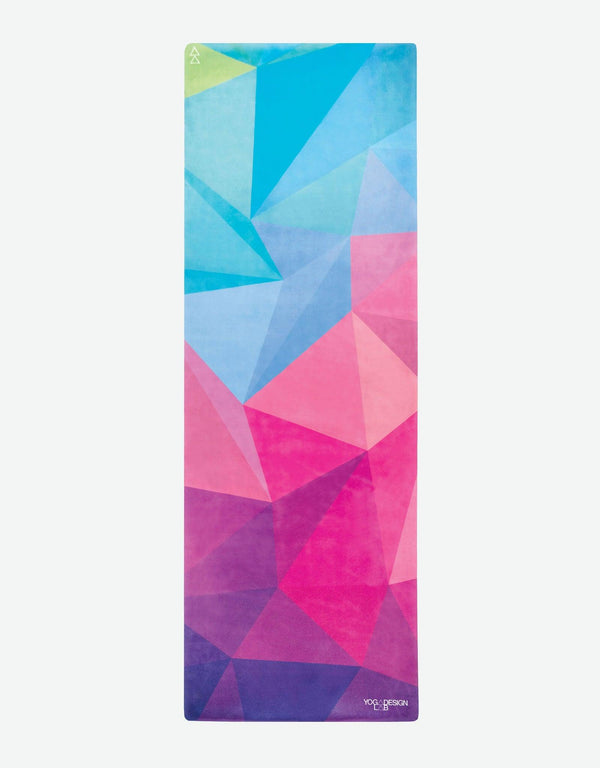
Grip is the most critical factor when you are relying on someone else for balance. If one person slips, both people are at risk of losing their footing. We recommend using a mat with high-performance traction. Our Infinity Mat is a popular choice for partner work because its textured surface provides a "locked-in" grip that handles the extra pressure of two bodies.
If your session tends to get sweaty or if you are practicing in a warmer room, the Combo Mat is an ideal solution. Its recycled PET microfiber top acts like a built-in towel. The surface actually becomes grippier as it gets damp, ensuring that your hands and feet stay exactly where you place them.
Setting Ground Rules
Establish a "language of touch" before you start moving. Not everyone has the same flexibility or comfort levels.
- Check-in often: Ask "How does this feel?" frequently.
- Use safety signals: A simple "stop" or "ease up" should be respected immediately.
- Sync your breath: Try to time your inhales and exhales together to create a shared rhythm.
Key Takeaway: The success of a partner session relies on "active listening" with your body. By syncing your breath and maintaining open communication, you create a safe environment for both beginners to grow.
Essential Yoga Poses for Beginners 2 People
These poses are selected specifically for their accessibility. They do not require advanced strength, making them perfect for those just starting their journey together.
1. Seated Back-to-Back Breathing (Sukhasana)
This is the perfect way to begin. Sukhasana (Easy Pose) is a simple cross-legged seated position. This pose grounds both practitioners and builds an immediate physical connection.
- Step 1: Sit back-to-back with your partner, ensuring your spines are touching from the tailbone to the shoulder blades.
- Step 2: Rest your hands on your knees and close your eyes.
- Step 3: Feel the other person’s breath expand against your back.
- Step 4: Try to match your rhythm until you are breathing as one.
Bottom line: This builds awareness and sets a mindful tone without any physical challenge.
2. Seated Spinal Twist
Remaining in your back-to-back seated position, this twist helps improve spinal mobility. It is a fantastic way to relieve tension in the lower back after a long day of sitting at a desk.
- Step 1: On an inhale, reach both arms overhead to lengthen your spine.
- Step 2: As you exhale, both partners twist to the right.
- Step 3: Reach your right hand back to rest on your partner’s left knee. Place your left hand on your own right knee.
- Step 4: Hold for five breaths, then switch sides.
3. Double Temple Pose
This provides a deep stretch for the chest and shoulders. It is often where we hold the most stress, and the weight of your partner helps pull your shoulders open in a way that is difficult to achieve solo.
- Step 1: Stand facing each other about three feet apart.
- Step 2: Inhale and reach your arms up. Hinge at the hips and lean forward until your hands meet your partner’s hands.
- Step 3: Continue to fold until your forearms or elbows are resting against each other.
- Step 4: Let your chest sink toward the floor while keeping your hips over your heels.
4. Partner Forward Fold
In the partner version of Uttanasana (Standing Forward Fold), you use each other’s weight to deepen the hamstring stretch and lengthen the spine.
- Step 1: Stand back-to-back with about six inches of space between your heels.
- Step 2: Inhale and reach up. Exhale and fold forward at the hips, letting your arms hang toward the floor.
- Step 3: Reach your hands back between your legs to grasp your partner’s hands or forearms.
- Step 4: Gently pull toward each other to increase the depth of the fold.
5. Double Tree Pose (Vrksasana)
Balance poses can be intimidating, but Vrksasana (Tree Pose) becomes much more accessible when you have a partner to lean on.
- Step 1: Stand side-by-side, facing the same direction.
- Step 2: Wrap your inner arms around each other’s waists for support.
- Step 3: Shift your weight onto your inner leg.
- Step 4: Lift your outer foot and place the sole against your inner calf or thigh. Bring your outer hands together at the heart center.
Myth: You need to be naturally flexible to do partner yoga. Fact: Partner yoga is actually designed to help those with limited flexibility by using the other person’s body weight to safely increase range of motion.
6. Double Chair Pose
This pose builds significant leg strength and tests the trust between you and your partner. It emphasizes the importance of equal effort; if one person pulls too hard, the balance is lost.
- Step 1: Stand back-to-back with your feet hip-width apart and heels a foot away from each other.
- Step 2: Lean your weight into each other’s backs.
- Step 3: Slowly walk your feet forward as you both slide down until your knees are at a 90-degree angle.
- Step 4: Keep your backs pressed firmly together for stability.
7. Partner Warrior III (Virabhadrasana III)
Warrior III is a powerful pose for building leg strength. By holding onto each other, you can achieve a "T" shape that is much more stable than practicing alone.
- Step 1: Stand facing each other slightly further than arm's length apart.
- Step 2: Hinge forward at the hips and place your hands on each other’s shoulders.
- Step 3: Simultaneously lift one leg behind you, extending it straight back.
- Step 4: Aim to keep your hips level and square to the floor.
8. Partner Boat Pose (Navasana)
This is a playful pose that works the core muscles while stretching the hamstrings. It requires coordination to find the perfect balance point.
- Step 1: Sit facing each other with your knees bent and toes touching.
- Step 2: Reach out and grasp your partner’s hands or wrists.
- Step 3: One by one, lift your feet and press the soles of your feet against your partner’s soles.
- Step 4: Slowly try to straighten your legs, lifting your feet toward the sky to form a "V" shape.
Bottom line: If straightening both legs feels too intense, keep the knees bent. The goal is a straight spine and an open chest.
9. Standing Heart Opener
Backbends can be intimidating for beginners, but having a partner to hold onto makes them feel much safer and more supportive.
- Step 1: Stand facing each other and grab each other’s forearms firmly.
- Step 2: Plant your feet firmly, hip-width apart.
- Step 3: On an inhale, lift your chest toward the sky.
- Step 4: As you exhale, lean back away from your partner, using their weight as an anchor.
10. Side-by-Side Savasana
Every yoga practice should end with Savasana (Corpse Pose). Doing this together helps ground the energy you have just built.
- Step 1: Lie down on your back next to your partner.
- Step 2: You can lie side-by-side with your arms touching or with your heads near each other.
- Step 3: Close your eyes and let your breath return to its natural rhythm.
- Step 4: Spend five minutes in silence, acknowledging the effort and connection shared.
For more ideas, explore these beginner partner yoga poses.
Enhancing Your Practice with Props
Even "easy" poses can feel challenging if your muscles are tight. This is where props become essential. They are not "crutches" for beginners; they are tools for proper alignment.
- Cork Blocks: In poses like the Partner Forward Fold, if you cannot reach your partner’s hands, each of you can hold one end of a block. This extends your reach and keeps your spine from rounding. Our cork blocks are made from sustainably harvested cork, providing a stable grip.
- Yoga Straps: A strap is perfect for the Seated Spinal Twist if you have restricted shoulder mobility. It allows you to maintain a tall spine while still benefiting from the resistance of your partner’s movements.
- Yoga Bolsters: If you decide to end your session with a restorative pose, placing a bolster under your knees while lying side-by-side can help release the lower back and encourage total relaxation.
For more guidance on restorative support, read about the YDL yoga bolster.
Building a Routine: Sample Sequences
You don't need a full hour to reap the rewards of yoga poses for beginners 2 people. Consistency matters more than duration.
The 10-Minute Morning Connection
Focus on grounding and waking up the spine.
- Seated Back-to-Back Breathing (3 minutes)
- Seated Spinal Twist (2 minutes)
- Double Temple Pose (3 minutes)
- Standing Heart Opener (2 minutes)
The 20-Minute Strength Builder
Focus on active poses that build heat and focus.
- Double Tree Pose (4 minutes)
- Double Chair Pose (4 minutes)
- Partner Warrior III (4 minutes)
- Partner Boat Pose (4 minutes)
- Side-by-Side Savasana (4 minutes)
The 15-Minute Evening Wind Down
Focus on calming the nervous system for better sleep.
- Seated Back-to-Back Breathing (5 minutes)
- Partner Forward Fold (5 minutes)
- Side-by-Side Savasana with a Bolster (5 minutes)
Sustainability: Connection to Each Other and the Earth
When you practice with another person, you are honoring a connection. We believe that connection should extend to the planet. Many mass-produced mats are made with harsh chemicals or non-recyclable plastics that end up in landfills.
Sustainability is woven into our materials from the start. We use natural tree rubber, water-based inks, and recycled PET microfiber made from plastic bottles. When you roll out our gear for a partner session, you are practicing on materials that are as kind to the earth as they are to your body. Knowing your gear is eco-conscious adds a layer of mindfulness to every movement.
Explore Yoga Design Lab’s sustainability commitment to learn more about the connection between practice and planet.
Overcoming Common Challenges
It is perfectly normal to feel clumsy during your first few attempts at partner yoga. Here is how to handle common hurdles:
- Mismatched Heights: You do not need to be the same size as your partner. In standing poses like Double Tree, the taller person can simply widen their stance or bend their knees slightly more to align with the other person.
- Laughter and Focus: Laughter is a great sign! It means you are relaxed. If you find yourselves getting too distracted, return to the Seated Back-to-Back Breathing to reset your focus.
- Falling Out of Balance: Falling is part of the process. If you lose your balance in Double Boat Pose, simply find your footing and try again. This builds resilience and shows you that perfection is not the goal.
Key Takeaway: Partner yoga is about the experience of the union itself, not about creating an Instagram-worthy photo. Focus on the feeling of support and the rhythm of your shared breath.
Setting Realistic Expectations
It is easy to see photos of advanced partner yoga and feel like you aren't doing enough. However, the goal of these yoga poses for beginners 2 people is to feel better in your body and more connected to your partner. Some days your balance will be off, or your hamstrings will feel tight. That is perfectly okay.
Yoga is a practice, not a performance. If you find yourselves getting frustrated, take a break and return to the breath. Returning to the collective inhale and exhale always resets the energy of the session.
The Yoga Design Lab Story
Our journey began in Bali, where our founder Chad Turner noticed a sea of uninspiring, mass-produced yoga mats in a local studio. He envisioned a brand that combined high-performance functionality with stunning, artful design—and did it sustainably. We believe that when your gear is beautiful and eco-friendly, you are more excited to show up on your mat. Whether you are practicing with a partner or on your own, our mission is to provide tools that support your journey while remaining kind to the planet.
If you are unsure which mat will best support your new partner practice, we invite you to take our Mat Quiz. It is a simple tool designed to match your specific needs—like grip preference and cushioning—with the perfect mat for your shared home studio.
FAQ
Is partner yoga harder than regular yoga?
For many beginners, partner yoga is actually more accessible because you have someone else to help you balance and deepen your stretches. While it requires more communication, the physical support of another person can make standing poses much easier to hold.
What should we wear for partner yoga?
Wear comfortable, stretchable clothing that stays in place. Avoid overly loose shirts that might fall over your face or get caught in your partner's hands during transitions. Most practitioners prefer form-fitting leggings or shorts and a supportive top.
Do we need a special mat for two people?
While you can use two mats side-by-side, having a mat with superior grip is essential for safety. Because partner yoga involves pushing and pulling against each other, a high-traction surface like our Combo Mat ensures you don't slide during poses like Double Chair.
For additional guidance on support and cushioning, read this guide to choosing a thick, supportive yoga mat.
Can two beginners do partner yoga safely?
Yes, as long as you stick to beginner-level poses and prioritize verbal check-ins. Avoid "flying" poses or advanced inversions until you have built a strong foundation of trust and core strength. Focus on grounded poses where both people keep at least one foot on the floor.


