


Introduction
You have finally reached your destination after hours of cramped flights and transit. The air is fresh, the view from your balcony is inspiring, and your body is craving movement. You unroll your travel mat, move into your first Surya Namaskar (Sun Salutation), and suddenly, your hands begin to slide. The frustration of losing your footing in a hotel room or a foreign studio can break the meditative flow of your practice. At Yoga Design Lab, we believe that your practice should remain high-performance and visually inspiring, no matter where your journey takes you. Finding the best non slip travel yoga mat is about more than just saving space in your suitcase; it is about maintaining the integrity of your practice. This guide explores the essential features of portable mats that offer professional-grade grip without the bulk.
Why Grip is Non-Negotiable for Travel
Practicing yoga while traveling presents unique challenges that demand a superior grip. Unlike your home studio, where the environment is controlled, travel practice often happens in humid tropical climates, air-conditioned hotel rooms, or even outdoors on uneven terrain. A standard mat might feel "sticky" when you first touch it with dry hands, but that traction can vanish the moment you generate heat or encounter environmental moisture.
Losing your connection to the mat during vinyasa (breath-synchronized movement) is not just a distraction; it can lead to injury. When your hands slide in Adho Mukha Svanasana (Downward-Facing Dog), you risk straining your wrists or shoulders as your muscles overcompensate for the lack of stability. A truly high-performance travel mat must provide a reliable foundation that works with your body, not against it.
Quick Answer: The best non slip travel yoga mat typically features a natural tree rubber base for floor traction and a moisture-activated top layer like microfiber or cork. A thickness of 1.5mm allows the mat to be folded flat into a carry-on while maintaining the high-performance grip needed for sweaty or humid sessions.
All Yoga Mats




Understanding Mat Materials for Portability
The material composition of your travel mat determines its weight, its foldability, and how it responds to sweat. Most practitioners prioritize weight, but the lightest materials are often the most prone to slipping. To find a balance, you must look at the science behind the surface.
Natural Tree Rubber
The foundation of a high-quality mat should almost always be natural tree rubber. Unlike synthetic foams, natural rubber provides a "weighty" grip on the floor, ensuring the mat does not bunch up or slide across hardwood hotel floors. It is sustainably harvested and biodegradable, aligning your practice with the values of ahimsa (non-harm). While rubber is slightly heavier than PVC (polyvinyl chloride), the stability it provides is essential for a safe practice.
Recycled PET Microfiber
For those who enjoy a sweaty practice or travel to humid destinations, recycled PET (polyethylene terephthalate) microfiber is an innovative choice. This material is made from recycled plastic bottles, turning waste into high-performance gear. The magic of microfiber lies in its moisture-activated grip. The more you sweat, the more the fibers create a suction-like tension against your skin. It essentially functions as a mat and a towel bonded together.
Sustainable Natural Cork
Cork is a favorite for travelers who want a grounded, earthy feel. It is naturally antimicrobial, which is a massive advantage when you are moving between locations and cannot deep-clean your gear every day. Cork contains a waxy substance called suberin, which becomes grippier when wet. This makes it an excellent non-slip surface for both dry and sweaty sessions. If cork sounds like the right fit for your practice, explore the Cork Yoga Mat collection.
The Tech Behind the Grip: Dry vs. Wet
Not all "non-slip" surfaces are created equal, and the right one for you depends on your personal physiology. Some yogis have naturally dry hands, while others begin to glow the moment they step onto the mat.
Dry Grip Performance
If you rarely sweat or prefer restorative styles of yoga, you need a mat that offers immediate traction. Materials like natural rubber or certain textured surfaces provide this "dry grip." However, if you transition into a more vigorous flow, these surfaces can sometimes become slick once moisture is introduced.
Moisture-Activated Grip
This is the gold standard for hot yoga enthusiasts and globetrotters. Our signature Travel Combo Mat utilizes this technology. The microfiber top layer is designed specifically to respond to moisture. If you start your practice with very dry hands, a quick mist of water on the mat will activate the grip immediately. As your practice intensifies and you generate heat, the mat becomes even more secure.
Key Takeaway: Choose a mat surface based on your sweat level. Microfiber and cork are ideal for those who sweat or practice in humidity, while natural rubber provides excellent immediate traction for drier practices.
Foldable vs. Rollable: Suitcase Strategies
One of the most frequent debates among traveling yogis is whether to fold or roll their mat. The answer usually depends on the thickness of the mat and the type of luggage you use.
Foldable mats are the ultimate space-savers for the minimalist traveler. A 1.5mm mat, like our Travel Combo Mat, is thin enough to be squared away like a pair of jeans. This allows you to tuck it into the laptop sleeve of a backpack or lay it flat at the bottom of a carry-on suitcase. Folding avoids the awkward, long cylinder of a rolled mat, which often requires a dedicated bag or external straps.
Rollable mats are typically slightly thicker, ranging from 2mm to 3mm. While rolling takes up more volume, it helps the mat maintain a perfectly flat shape when unrolled. Thinner mats that are folded for long periods may show temporary crease lines, though these usually disappear once you begin your practice. If you are a carry-on-only traveler, the ability to fold is often the deciding factor. For more guidance, read this guide to choosing a non-slip travel yoga mat.
Finding Support on Hard Floors
A common concern with ultra-thin travel mats is the lack of cushioning for the joints. At 1.5mm, you are essentially practicing on the floor. While this provides a wonderful sense of "grounding" and helps with balance poses, it can be tough on the knees during long holds.
There are several ways to manage the lack of density without carrying a heavy mat:
- The Layering Technique: If you are visiting a local studio, lay your travel mat over one of theirs. This provides the hygiene and grip you love with the cushion of a standard mat.
- The Hotel Hack: Practice on the carpeted area of your hotel room rather than the hardwood or tile. The carpet provides the padding, and your rubber-backed mat provides the stable, non-slip surface.
- The Fold Trick: When moving into a pose like Anjaneyasana (Low Lunge), simply fold the edge of your mat over once or twice to create a triple-layer cushion specifically for your knee.
- The Prop Substitute: Use a folded hotel towel under your knees or wrists for extra support during floor-based sequences.
Material Deep Dive: The Travel Combo Mat
We designed the Travel Combo Mat to be the ultimate companion for the nomadic yogi. It solves the most common travel problem: the need for both a mat and a towel. By bonding a high-performance microfiber top to a natural rubber base, we created a single piece of gear that is lightweight and incredibly grippy.
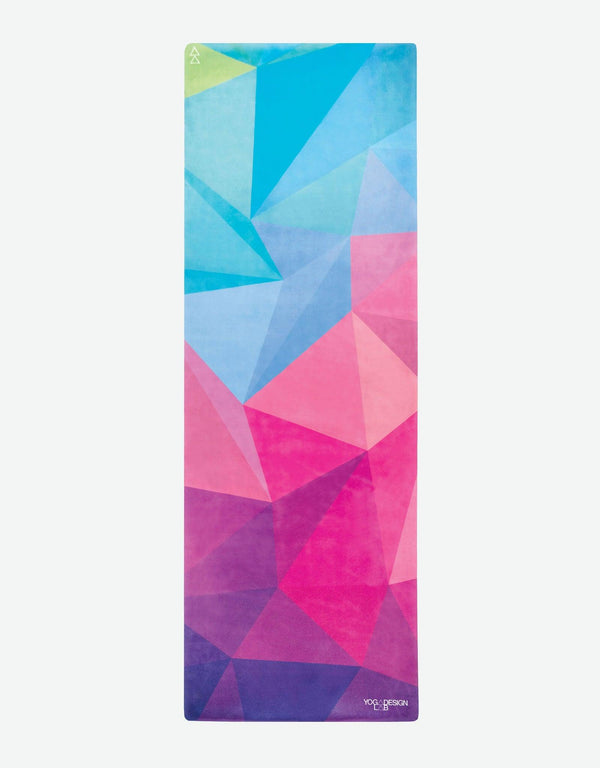
The top layer is made from approximately 15 recycled plastic bottles, making it as sustainable as it is functional. Because it is essentially a towel-top mat, it is machine washable. This is a significant benefit for travelers who may be practicing in dusty or outdoor environments and want to keep their gear fresh between destinations. It folds flat, weighs very little, and features artful, nature-inspired designs that bring a sense of beauty to any temporary practice space. Browse the travel yoga mat collection to compare the available options.
The Antimicrobial Advantage of Cork
For long-term travelers or those visiting remote areas, the Travel Cork Mat is a powerhouse of utility. Cork is harvested from the bark of Mediterranean oak trees without harming the tree itself, making it a 100% renewable resource.
The primary advantage of cork for travel is its natural resistance to bacteria and odors. Cork cells are closed, meaning they do not absorb sweat or moisture into the core of the mat. This makes it "self-cleaning" to a degree, though it still requires a surface wipe. The grip on cork is exceptional—it feels smooth and earthy when dry but offers a powerful lock once you begin to move. Like the microfiber version, our travel cork option features a natural rubber base to ensure it stays anchored to the ground.
Scenarios: Where Your Travel Mat Shines
A portable, non-slip mat opens up a world of possibilities for maintaining your routine. Consistency is the hardest part of yoga, especially when your schedule is in flux.
The Airport Layover
Long travel days can leave the body feeling stiff and compressed. Many modern airports now offer dedicated yoga or meditation rooms. Having a foldable mat in your backpack allows you to move through a few gentle stretches or a seated pranayama (breath control) session, helping to reset your nervous system before the next flight.
The Urban Adventure
If you are staying in a bustling city, finding a quiet park for a morning flow is a wonderful way to ground yourself. A thin travel mat provides a clean, dry barrier between you and the grass without being a burden to carry while you sightsee for the rest of the day.
The Beach Retreat
Practicing on sand is beautiful but notoriously unstable. A rubber-backed travel mat provides a level surface that keeps sand off your skin and gives you the traction needed for balancing poses. Because it is thin, you still feel the soft support of the earth beneath you.
How to Care for Your Mat on the Road
Travel is inherently messy, and your mat will eventually encounter dust, sand, or sweat. Keeping the surface clean is essential for maintaining its non-slip properties. Dirt and body oils can clog the pores of the material, creating a slick film that ruins traction.
Step-by-Step Care Routine
Step 1: The Daily Wipe. After every session, wipe the surface with a damp cloth. You do not need harsh chemicals; a simple mixture of water and a drop of mild soap is sufficient. Step 2: Deep Cleaning. If you are using a microfiber mat, you can wash it in a machine on a cold, gentle cycle. Use a very small amount of detergent and avoid bleach or fabric softeners, which can ruin the grip. Step 3: Drying. Always air dry your mat. Never put it in a dryer, as the heat can damage the natural rubber. Hang it over a shower rod or a balcony railing in the shade. Step 4: Storage. While these mats are foldable for transit, try to store them rolled when you are not traveling. This helps maintain the integrity of the materials over the long term.
For a more detailed routine, see this guide to cleaning a yoga mat for performance and longevity.
Note: Never leave your natural rubber mat in a hot car or in direct sunlight for extended periods. UV rays and extreme heat can cause natural rubber to become brittle and lose its stickiness.
Sustainability: Practice with Purpose
As yogis, our connection to the planet is a vital part of our journey. Choosing a sustainable travel mat is a way to honor the environments we visit. Many conventional mats are made from PVC or other plastics that take hundreds of years to decompose and release toxins during the manufacturing process.
We are committed to a different path. By using natural tree rubber, water-based inks, and recycled plastic bottles, we ensure that our gear supports both your practice and the earth. When you roll out a mat that is biodegradable and non-toxic, it changes the energy of your practice. It becomes a statement of respect for the world you are exploring. Learn more about our sustainability commitment.
Choosing Your Style: The Mat Quiz
With several options available, deciding which travel mat is right for you can be a challenge. Do you prefer the soft, towel-like feel of microfiber or the firm, grounded texture of cork? Does your practice involve heavy sweat or gentle stretching?
To help you find your perfect match, we created a personalized Mat Quiz. This tool asks about your typical practice environment, your portability needs, and your aesthetic preferences to recommend the ideal foundation for your movement. Whether you are a dedicated hot yoga practitioner or a restorative enthusiast, the right gear is out there.
The Mental Benefit of a Familiar Surface
There is a psychological comfort in unrolling your own mat. Travel involves constant change—new beds, new smells, new sounds. Your mat is a piece of home that stays with you. It is a familiar "anchor" for your mind.
When you step onto your mat, your brain recognizes it as a place of focus and calm. This mental trigger makes it much easier to drop into a meditative state, even if you are in a crowded hostel or a noisy city apartment. The beautiful, artful designs of YDL gear are intended to inspire this transition. We believe that when your gear is a piece of art, you are more excited to roll it out and show up for yourself.
Building a Consistent Practice While Moving
Maintaining a yoga routine while traveling requires a shift in mindset. You may not have an hour for a full class, and that is okay. Ten minutes of focused movement on a reliable, non-slip surface is more beneficial than skipping your practice entirely.
Tips for travel consistency:
- Set a Small Goal: Commit to just five sun salutations every morning.
- Use Digital Guidance: Follow a short video if you feel uninspired.
- Be Flexible with Time: If you missed your morning flow, a five-minute stretch before Savasana (final relaxation/Corpse Pose) at night can help you sleep better.
- Pack Early: Keep your mat at the top of your bag so it is the first thing you see when you arrive.
The Yoga Design Lab Story
Our journey began in 2014 in Bali. Our founder, Chad Turner, was practicing in a beautiful Ubud studio but noticed a sea of uninspiring, mass-produced yoga mats. He envisioned a brand that blended high-performance functionality with stunning, artful design—all while maintaining a deep commitment to sustainability. From that vision, Yoga Design Lab was born. We believe that beautiful gear makes people more excited to show up on their mats, and our travel collection is a testament to that belief. We have poured our passion for design and the planet into every 1.5mm of our travel mats, ensuring they are as resilient and vibrant as the yogis who carry them. Discover how Yoga Design Lab began.
Bottom line: A high-performance travel mat should not be an afterthought. By investing in a non-slip, eco-friendly surface, you are investing in the longevity and consistency of your practice, no matter where in the world you land.
FAQ
Can I really fold a yoga mat without damaging it?
Yes, but only if the mat is specifically designed for it. Mats that are 1.5mm thick and made from a combination of natural rubber and microfiber or cork are engineered to be foldable. You should avoid folding thicker mats (3mm or more) for long periods, as this can create permanent creases or cause the layers to separate.
My hands are very dry, and I'm slipping on my microfiber mat. What should I do?
Microfiber is a moisture-activated surface. If your hands are very dry, the fibers may not have enough tension to grip. Simply spray a light mist of water on the areas where your hands and feet go at the start of your practice. As you warm up and begin to generate your own moisture, the mat will provide a rock-solid grip.
Is a 1.5mm mat thick enough to be my only yoga mat?
While a 1.5mm mat is the best choice for travel due to its portability, most practitioners prefer a thicker mat (3.5mm to 5.5mm) for their primary daily practice at home. The thin version is designed to be a lightweight alternative. If you use it daily, we recommend layering it over a rug or a studio mat to provide your joints with more support.
How do I get rid of the natural rubber smell on a new mat?
Because we use genuine, natural tree rubber rather than synthetic chemicals, there may be a slight earthy scent when you first unroll your new mat. This is completely normal and non-toxic. To help it dissipate, leave your mat unrolled in a well-ventilated, shaded area for 24 to 48 hours before your first use.


