


Introduction
We have all experienced that jarring moment mid-flow when you step back for a lunge and your foot lands on the cold, hard studio floor. Or perhaps you are settling into Savasana (corpse pose) only to find your heels dangling off the edge of your mat. These minor distractions pull your focus away from your breath and disrupt the moving meditation of your practice. At Yoga Design Lab, we believe your gear should be a beautiful, high-performance sanctuary that supports your unique body and movements. Choosing the right dimensions is the first step toward a practice where you can focus entirely on your alignment. This guide explores standard dimensions, the "Height Plus Six" rule, and how thickness impacts stability. Finding the best size for a yoga mat ensures your foundation feels like home every time you roll it out.
Quick Answer: For most practitioners, the best size for a yoga mat is 71–72 inches long and 24 inches wide. If you are over 6 feet tall, look for an extra-long mat of 80–84 inches, and prioritize a 3.5mm to 5mm thickness for the best balance of joint cushioning and stability.
Understanding Standard Yoga Mat Dimensions
For decades, the yoga world followed a "one size fits most" philosophy with a standard dimension of 68 inches long and 24 inches wide. This size was originally popularized because it was easy to manufacture and fit perfectly into studio storage cubbies. However, as the modern yoga community has grown, so has our understanding of body diversity and practice needs.
Today, many professional brands have shifted the baseline to a 71-inch or 72-inch length. This provides a few extra inches of "breathing room" for the average adult. A 24-inch width remains the universal standard because it accommodates the average shoulder span while fitting into crowded studio floor plans. When you are in a plank or Adho Mukha Svanasana (downward-facing dog), your hands should naturally land within these boundaries. For a closer look at measurements and fit, explore this yoga mat size guide.
While these standard dimensions work for many, they are not a universal solution. Your mat is your personal space for asana (physical poses). If you find yourself constantly adjusting your hands or feet to stay on the mat, you likely need to step outside the standard size.
All Yoga Mats


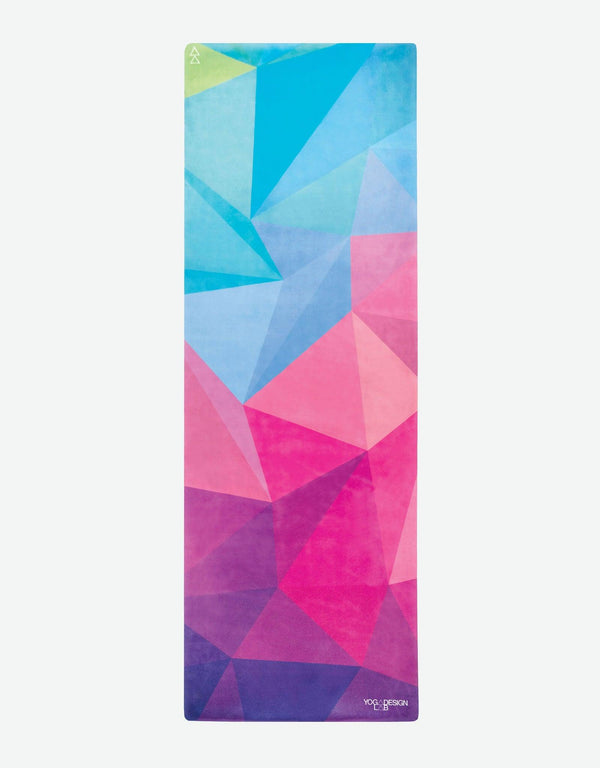


The Length Guide: How Long Should Your Mat Be?
Length is perhaps the most critical dimension for comfort during transitions. If your mat is too short, you will struggle during Surya Namaskar (sun salutations). You might step back into a lunge and find your back foot landing on a slippery floor, which can disrupt your rhythm and compromise your safety.
The Height Plus Six Rule
A helpful guideline used by many experienced teachers is the "Height Plus Six" rule. To find your ideal minimum length, add six inches to your total height. This extra space ensures that when you lie down for final relaxation, both your head and your heels are fully supported. It also provides a necessary buffer for active transitions.
Choosing Based on Your Height
Practitioners under 5'8": A standard 68-inch to 72-inch mat is generally perfect for you. You will have plenty of room to move without feeling cramped, and your mat will remain lightweight and easy to carry.
Practitioners between 5'9" and 6'0": We recommend sticking with at least a 72-inch mat. This ensures your feet stay securely on the grip of the mat during wide-legged poses like Warrior II. It prevents the distraction of having one foot on the mat and one on the floor.
Practitioners over 6'0": You will likely be much more comfortable on an extra-long mat. These typically range from 80 to 85 inches. Using a mat that is too short can lead to a "shortened" stride, which may negatively affect your hip and knee alignment over time.
Key Takeaway: Always prioritize length if you are tall. A mat that is too short is the most common cause of practice frustration and can lead to subconscious alignment changes to stay within the boundaries.
Width Matters: Do You Need Extra Lateral Space?
While length is often the focus, the width of your mat determines your lateral freedom. The standard 24-inch width is designed to be compact and portable. However, it can feel restrictive for certain body frames or styles of movement.
Broad Shoulders and Stability
If you have broad shoulders, a 24-inch mat might feel narrow during poses like Plank or Chaturanga (four-limbed staff pose). In these postures, your wrists should ideally be directly under your shoulders. If your natural stance is wider than your mat, your hands will be forced onto the floor. This can lead to a lack of grip and less cushioning for your wrist joints.
Creating Personal Sanctuary
A wider mat—usually 26 to 30 inches—can provide a greater sense of security. It creates a larger "island" for your practice. This is especially helpful if you find yourself easily distracted by neighbors in a busy class. The extra width helps define your personal boundaries and gives you more room to spread your fingers and toes comfortably.
Considerations for Home Practice
If you primarily practice at home, portability is less of a concern. In this case, choosing a wider mat can feel like a luxury. It allows you to move through twisting poses or wide-legged folds without worrying about your limbs landing on your home flooring. It also provides more room for restorative poses where you might want to spread your arms wide.
Decoding Yoga Mat Thickness and Density
When we talk about the size of a mat, we must also consider its thickness. This is the vertical dimension that sits between you and the floor. The right thickness is a careful balance between joint comfort and balance stability.
Ultra-Thin Mats (1.5mm – 2mm)
These are the travel specialists. They are designed to be lightweight and are often foldable. They provide an incredible connection to the floor, which is excellent for standing balance. However, they offer minimal cushioning. Many people use these as a hygienic layer over a studio mat. Our Travel Combo Mat is a favorite for yogis on the go who need a regular footprint with maximum portability.
Standard Thickness (3mm – 4mm)
This is the "sweet spot" for most practitioners. A 3.5mm mat provides enough cushion to protect your knees in a lunge while remaining thin enough to feel grounded. Grounding is essential for standing balance poses like Tree Pose, where a squishy surface can make your ankles feel unstable. Our signature Combo Mat collection is widely used in this thickness for its versatility.
Cushioned Mats (5mm – 6mm)
If you have sensitive knees, wrists, or a tender spine, a 5mm or 6mm mat is often the best choice. This extra thickness absorbs more impact and is a favorite for those who spend a lot of time in floor-based poses. The Infinity Mat collection is designed with this extra cushioning to provide a plush, supportive foundation for all practice levels.
Myth: A thicker mat is always better for beginners. Fact: Beginners often struggle with balance. A very thick, soft mat can actually make learning balance poses harder. Most beginners are best served by a 3.5mm to 5mm mat that provides a clear feel for the floor.
The Science of Support: Density vs. Thickness
It is a common mistake to assume that a thicker mat is always more comfortable. The real secret to joint protection is density. Density refers to how "packed" the material is.
The Bottom-Out Effect
A cheap, low-density foam mat might be 10mm thick, but when you put your weight on it, the material collapses. Your knee sinks straight through the foam and hits the hard floor. This is known as "bottoming out." You are left with the bulk of a thick mat without any of the actual protection.
High-Density Materials
A high-density mat, like those made from natural tree rubber, will feel much more supportive than a thicker, cheaper foam mat. This is because the dense material resists compression. It provides a firm, responsive surface that protects your joints without sacrificing stability. At Yoga Design Lab, we use natural rubber bases to ensure our mats stay flat and provide a stable foundation that does not bottom out.
Matching Mat Size to Your Yoga Style
Your preferred style of yoga should influence the size and thickness of the mat you choose. Not every mat is built for every type of movement.
Vinyasa and Power Yoga
In active, flowing styles, you move constantly. You need a mat that stays in place and provides a clear landing zone. A standard width of 24 inches is usually best for these classes so you can stay centered in your lane. A standard thickness of 3.5mm is ideal for maintaining balance during quick transitions.
Hot Yoga
In a heated room, your mat will get wet. Grip is the absolute priority. A standard or slightly longer mat works well, but the construction is key. Our Combo Mat bonds a natural rubber base to a recycled PET (polyethylene terephthalate) microfiber top, acting as a mat and towel in one. The grip is moisture-activated, meaning it gets grippier as you sweat.
Restorative and Yin Yoga
Because these styles involve holding poses for long periods, comfort is your top priority. You might prefer a thicker 5mm or 6mm mat. This allows your limbs to fall away from the body in resting poses without touching a cold floor. Since you aren't doing many standing balance poses, the extra cushioning of a thicker mat is a major benefit.
Portability and Weight Considerations
The best size for a yoga mat is only useful if you can actually get your mat to class. As size and thickness increase, so does the weight.
For Commuters: If you walk, bike, or take public transit, a 3.5mm mat is usually the heaviest most people want to carry. Natural rubber is high-quality but heavy, so a standard-size rubber mat will feel more substantial than a foam one.
For Travelers: If you are packing for a retreat, the Travel Combo Mat is the ideal choice. At 1.5mm thick, it folds flat like a piece of clothing but still offers a full-length practice surface.
For Home Practice: If your mat stays in your living room, weight is a non-issue. You can prioritize the largest, thickest mat your space allows for maximum comfort.
Key Takeaway: Mat weight is a trade-off. Natural rubber provides superior grip and sustainability but adds weight. Consider your daily commute before choosing an extra-thick or extra-long rubber mat.
How to Measure Your Perfect Mat Size
If you are still undecided, you can perform a quick test at home using a tape measure. This ensures you buy with confidence.
Step 1: Measure your total height. / Use a tape measure to get your exact height. Add at least six inches to find your ideal minimum mat length.
Step 2: Check your wingspan. / Reach your arms out to the sides. If your wingspan is significantly wider than 24 inches, you will likely benefit from a wider mat for poses like Warrior II.
Step 3: Test your Downward Dog. / Get into the pose on a carpeted floor. Have someone measure the distance from your fingertips to your heels. Your mat should be at least this long, plus a few inches on either end.
Step 4: Check your "Savasana spread." / Lie down on your back and relax. Let your feet fall open and your arms rest by your sides. Measure the width of your body in this relaxed state. If you are wider than 24 inches, consider an extra-wide mat.
The Role of Sustainability in Your Choice
When we discuss the size and thickness of a mat, we must also consider the environmental footprint of those materials. Traditional mats are often made from PVC, which is a plastic-based material that can off-gas chemicals and is difficult to recycle.
We believe that the space you practice on should be as clean as the air you breathe during Pranayama (breath control). Our mats utilize natural tree rubber as a foundation rather than synthetic petroleum-based foams. We use water-based inks for our nature-inspired prints, ensuring no toxic chemicals are released during your practice. Explore our sustainability commitment for more on these material choices.
By choosing a mat that uses recycled PET microfiber from plastic bottles, you are supporting a circular economy. A larger mat uses more material, so choosing sustainable options becomes even more important. Quality gear that lasts for years is the ultimate form of sustainability.
Caring for Different Mat Sizes
A larger or thicker mat requires a bit more attention when it comes to cleaning and storage. Proper care ensures your investment lasts for many years of practice.
- Rolling Properly: Always roll your mat with the top side (the practice surface) facing out. This helps the corners stay flat when you unroll it for class.
- Cleaning: Larger surface areas take more time to dry. Use a gentle mat wash and ensure you wipe the entire surface. Let it air dry completely before rolling it up to prevent odors.
- Storage: Avoid leaving your mat in a hot car. Extreme heat can cause natural rubber to become brittle or lose its grip over time.
- Air Drying: For microfiber-top mats like our Combo Mat, they can be machine washed on a cold, gentle cycle. Always hang them to air dry and never put them in the dryer.
Conclusion
Finding the best size for a yoga mat is a personal decision that balances your physical frame with your unique practice style. While the 71" x 24" modern standard works for many, taller practitioners and those who prioritize joint health should look toward extra-long or cushioned options. Yoga Design Lab was founded to solve these functional frustrations, creating gear that blends stunning, artful design with the high-performance grip needed for real practice. When your mat fits your body and your needs, it disappears beneath you, allowing you to focus entirely on your breath and your flow.
- Modern standard dimensions are 71–72 inches long by 24 inches wide.
- Use the "Height Plus Six" rule to ensure your head and heels stay on the mat.
- High density is more important than thickness for protecting your joints.
- Choose a 1.5mm thickness for travel and 3.5mm to 5mm for daily practice.
"Your yoga mat is the foundation of your practice. When the size and support are right, you can move with total confidence and presence."
If you are still unsure which mat is your perfect match, we recommend taking our Mat Quiz for a personalized recommendation based on your height and style. You can also explore our full yoga mat collection to find the design that inspires you to roll out your mat every day.
FAQ
What is the most common yoga mat size?
The modern industry standard for a yoga mat is 71 to 72 inches long and 24 inches wide. While 68 inches was common in the past, the slightly longer 72-inch length has become the preferred baseline as it accommodates a wider range of heights and provides more room for transitions.
How do I know if I need an extra-long yoga mat?
If you are 6 feet tall or taller, you should consider an extra-long mat that is 80 to 84 inches long. A simple way to tell is the "Savasana test"—if your head or heels touch the floor when you are lying flat and relaxed, your mat is too short for your frame.
Is a thicker yoga mat better for people with joint pain?
A thicker mat can help, but the density of the material is actually more important for joint protection. A high-density 5mm mat made of natural rubber will provide better support and prevent "bottoming out" better than a very thick 10mm mat made of soft, air-filled foam.
Can a yoga mat be too wide for a studio class?
A yoga mat is only "too wide" if it encroaches on your neighbor's space in a very crowded class. Most studios are designed for 24-inch to 26-inch mats. If you use a 30-inch extra-wide mat, it is best to arrive early and place your mat where it won't disrupt the flow of the room.


